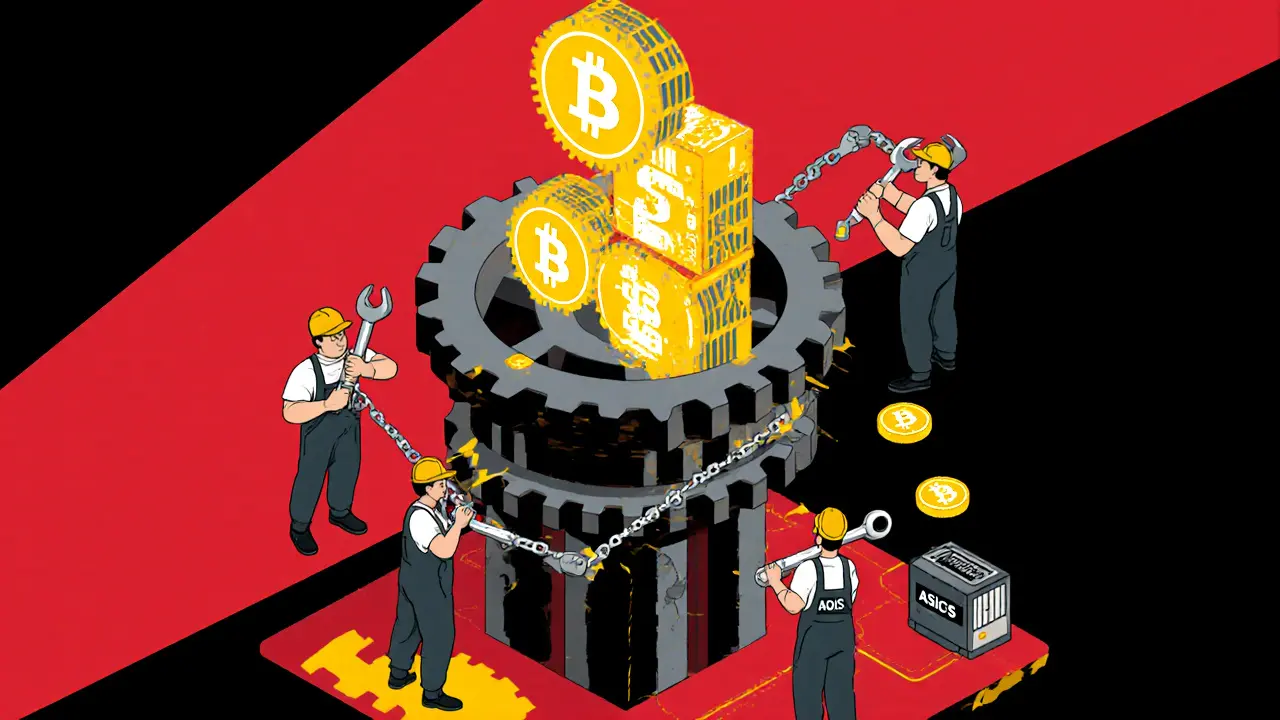
Bitcoin Transaction Fees: What They Are, Why They Matter, and How to Avoid Paying Too Much
When you send Bitcoin transaction fees, the small amount of Bitcoin paid to miners to confirm your transaction on the blockchain. Also known as network fees, these payments keep the Bitcoin network running by incentivizing miners to validate and bundle your transaction into a block. Unlike bank transfers, there’s no fixed price—fees change based on demand, block space, and how urgently you want your transaction confirmed.
These fees are directly tied to block size, the maximum amount of data each Bitcoin block can hold. Bitcoin’s block size limit is 1MB (or around 4MB with SegWit), so when lots of people send transactions at once—like during a price surge or a big NFT drop—the network gets crowded. Miners prioritize transactions with higher fees, so if you pay too little, your transaction might sit in the mempool for hours, or even days. This isn’t a flaw—it’s a market. The network uses price signals to manage congestion, not arbitrary rules.
That’s why understanding Bitcoin mining rewards, the combination of newly minted Bitcoin and transaction fees paid to miners for securing the network matters. After the 2024 halving, block rewards dropped to 3.125 BTC, and fees now make up a bigger slice of miner income. That means fees aren’t just a cost to you—they’re becoming a core part of Bitcoin’s long-term economics. If fees stay too low, miners may cut back, risking network security. If they spike too high, users leave for cheaper chains.
You don’t need to guess what fee to pay. Wallets like Electrum and BlueWallet show real-time fee estimates: low (slow), medium (normal), high (fast). But here’s the trick: timing matters more than amount. Sending on Sunday afternoon? Fees are often 70% lower than during weekday rush hours. Use tools like mempool.space to see how backed up the network is before you hit send.
And don’t assume bigger transactions cost more. A simple send from one address to another might cost less than a complex DeFi swap—even if the dollar value is tiny. It’s about data size, not money. That’s why batching payments or using Layer 2 solutions like the Lightning Network can slash your costs by 90%.
What you’ll find below isn’t just theory. These are real stories from people who paid too much, missed out, or hacked their way through Bitcoin’s fee maze. From Nigeria’s P2P traders who bypassed bank bans using fee-optimized transactions, to users caught in the 2021 surge when fees hit $60 per transfer—these posts show what actually works. You’ll also see how other blockchains handle fees differently, and why Bitcoin’s approach, while frustrating, is still the most battle-tested.
The Bitcoin block reward is the incentive miners receive for securing the network, made up of newly minted Bitcoin and transaction fees. It halves every four years, creating scarcity and shaping Bitcoin's value. As subsidies shrink, fees will become critical.