The Future of Sidechain Technology: Scaling, Security, and Specialization
 Jul, 9 2026
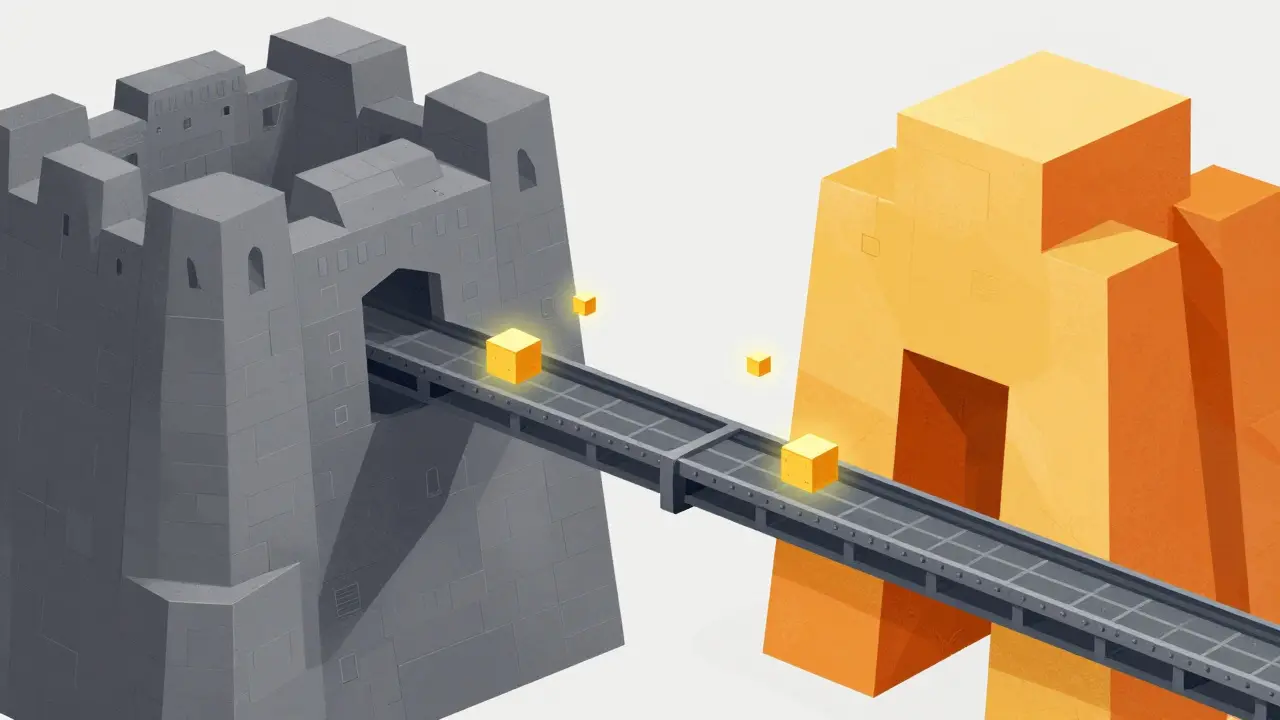
Imagine trying to drive a car on a highway where every single vehicle stops at every intersection to check its license. That is essentially what happened to early blockchains like Ethereum and Bitcoin as they grew in popularity. The network got clogged, fees skyrocketed, and transactions slowed to a crawl. Enter Sidechain technology, which acts like a dedicated express lane connected to that main highway. It allows data and assets to move freely between the main network and this secondary chain, keeping the primary road clear while handling heavy traffic elsewhere.
But here is the catch: sidechains are not just simple shortcuts. They are complex, independent networks with their own rules, security models, and governance. As we move through 2026, the conversation around sidechains has shifted dramatically. We are no longer asking if they work; we are asking how they fit into a future dominated by Layer-2 rollups and centralized exchanges. Are sidechains dying, or are they evolving into something far more specialized? Let’s break down the reality of where this technology stands today and where it is heading.
How Sidechains Actually Work
To understand the future, you first need to grasp the mechanics. A sidechain is a separate blockchain that connects to a parent blockchain (the mainnet) via a mechanism called a two-way peg. This peg acts like a secure bridge. When you want to move assets from Bitcoin to a sidechain like Liquid Network, you lock your Bitcoin in a smart contract on the mainnet. Once locked, an equivalent amount of tokens is minted on the sidechain for you to use.
The magic lies in the independence. Because the sidechain has its own consensus protocol-often Proof-of-Stake rather than the energy-intensive Proof-of-Work used by Bitcoin-it can process transactions much faster and cheaper. For example, Polygon’s sidechain historically processed transactions in about 2.1 seconds with fees averaging fractions of a cent, compared to Ethereum’s slower block times and higher gas costs during peak periods. However, this speed comes with a trade-off: the sidechain does not inherit the full security of the mainnet. If the sidechain’s validators collude or get hacked, your funds are at risk, even if the mainnet remains secure.
The Security Dilemma: Speed vs. Safety
This brings us to the biggest challenge facing sidechains today: security. In the early days, projects promised "mainnet-level security" for sidechains, but that was largely marketing fluff. According to data from Chainalysis, a significant majority of sidechains rely on a limited set of validators rather than inheriting the massive decentralized security of the mainnet. This creates a vulnerability gap.
We saw the consequences of this in high-profile hacks. The Nomad bridge exploit in 2022, which resulted in over $600 million in losses, highlighted how fragile these cross-chain connections can be when cryptographic proofs are mishandled. Today, the industry recognizes that sidechains provide only a fraction of the security assurance of the mainnet. Vitalik Buterin, co-founder of Ethereum, has noted that sidechains offer significantly less security inheritance compared to optimistic rollups, which mathematically tie their security back to the mainnet.
So, why do we still use them? Because for many applications, absolute decentralization is less important than functionality. If you are running a gaming dApp or processing micro-transactions for supply chain logistics, you might accept a lower security ceiling in exchange for the ability to execute complex smart contracts quickly and cheaply. The key is understanding this trade-off before you deposit your funds.
Sidechains vs. Layer-2 Rollups: The Great Divide
If you have been following crypto news, you’ve likely heard about Layer-2 solutions like Arbitrum, Optimism, and zkSync. These technologies compete directly with sidechains for the same problem: scaling. So, what’s the difference?
| Feature | Sidechains | Layer-2 Rollups |
|---|---|---|
| Security Source | Own validator set (weaker) | Inherits mainnet security (stronger) |
| Customizability | High (can change consensus, VM) | Low (must follow mainnet rules) |
| Finality Time | Fast (seconds) | Variable (depends on dispute periods) |
| Best Use Case | Gaming, Enterprise, Private Data | DeFi, High-Value Transfers |
Rollups bundle transactions and post data to the mainnet, ensuring that if the rollup fails, the mainnet can step in. Sidechains operate independently. This makes sidechains more flexible. You can tweak the code, change the block time, or even switch consensus mechanisms without waiting for the entire mainnet community to agree. This flexibility is why companies like Rootstock (a Bitcoin sidechain) can enable smart contracts on Bitcoin, something impossible on the mainnet due to its conservative upgrade path.
However, the trend is shifting. As rollups become faster and cheaper thanks to zero-knowledge (ZK) proofs, the unique selling point of sidechains-speed-is eroding. The future of sidechains, therefore, depends on leaning into their strength: customization.
The Shift Toward Specialization
General-purpose sidechains are becoming less relevant. Instead, we are seeing a rise in application-specific chains. Think of it like moving from a general-purpose computer to a specialized appliance. You don’t use a supercomputer to boil water; you use a kettle. Similarly, the blockchain ecosystem is fragmenting into chains designed for specific tasks.
Take Immutable X, for instance. It is a sidechain built specifically for NFTs and gaming. It offers instant, fee-less trading for digital assets, which is crucial for gamers who cannot wait 15 minutes for a transaction to confirm. Another example is ConsenSys Quorum, an enterprise-focused sidechain that allows businesses to run private transactions with permissioned access. These chains do not try to be everything to everyone. They solve one problem extremely well.
This specialization addresses the "noise" problem. On a general-purpose chain like Ethereum, every transaction competes for space. On a specialized sidechain, the parameters are tuned for that specific workload. For enterprise users, this means predictable costs and performance. For developers, it means fewer compatibility headaches.
Interoperability: The AggLayer Revolution
One of the biggest complaints about sidechains has always been fragmentation. If you hold assets on Polygon, Rootstock, and Liquid, moving them between these chains is a nightmare. You face long waiting periods, high fees, and the constant fear of bridge hacks. This siloed experience is unacceptable for mass adoption.
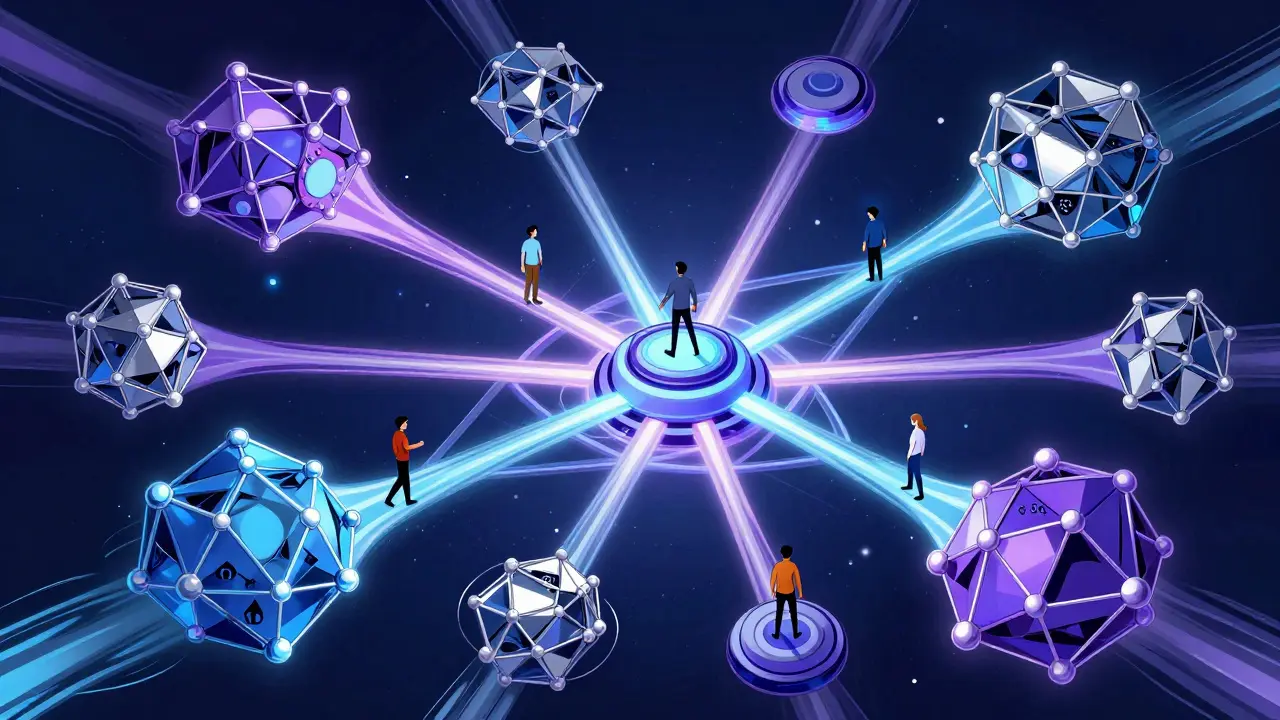
The solution emerging in 2026 is interoperability layers. Polygon’s announcement of the AggLayer is a prime example. This technology aims to connect multiple sidechains into a single liquidity pool. Imagine being able to send assets from one sidechain to another instantly, as if they were part of the same network, without going back to the mainnet. This "shared security" model attempts to give sidechains the best of both worlds: the flexibility of independent operation with the seamless user experience of a unified network.
Other protocols are exploring similar concepts. The goal is to make the underlying infrastructure invisible to the user. You should not need to know which chain you are on; you should just know that your transaction went through. This shift from "chain-centric" to "user-centric" design is critical for bringing non-crypto natives into the ecosystem.
Enterprise Adoption and Regulatory Reality
While retail users debate the merits of sidechains versus rollups, enterprises are quietly adopting sidechain technology. Why? Because privacy and compliance matter more to banks and supply chain managers than they do to DeFi traders. Sidechains allow for private transaction pools where sensitive business data is not visible to the public ledger.
Regulatory frameworks are also catching up. The SEC and other global bodies have begun to clarify the status of sidechain tokens. While uncertainty remains, the trend is toward treating sidechain infrastructure as utility rather than securities, provided they do not promise returns. This clarity is encouraging Fortune 100 companies to pilot sidechain solutions for identity management and asset tokenization. By 2027, the sidechain market is projected to grow significantly, driven largely by this B2B sector.
What to Watch Out For
If you are considering using or building on sidechains, keep these pitfalls in mind:
- Bridge Risk: Always verify the security audit of the bridge connecting the sidechain to the mainnet. This is the weakest link.
- Liquidity Fragmentation: Ensure there is sufficient liquidity on the sidechain for your needs. Thin order books can lead to slippage.
- Validator Centralization: Check how many validators secure the chain. A small number increases the risk of collusion.
- Exit Windows: Understand the time required to move assets back to the mainnet. Some sidechains require hours or even days for finality.
The future of sidechain technology is not about replacing the mainnet. It is about extending its reach. By offloading specific workloads to specialized, interconnected sidechains, the broader blockchain ecosystem can scale without sacrificing the core principles of decentralization. The era of "one chain to rule them all" is over. Welcome to the age of interwoven networks.
Are sidechains safer than Layer-2 rollups?
Generally, no. Layer-2 rollups inherit the security of the mainnet (like Ethereum), meaning you would need to compromise the mainnet itself to steal funds. Sidechains have their own independent security models, which are typically weaker because they rely on a smaller set of validators. However, sidechains offer greater customization and privacy options that rollups cannot easily match.
What is the two-way peg in sidechain technology?
The two-way peg is the mechanism that allows assets to move between the mainnet and the sidechain. When you send assets to the sidechain, they are locked in a smart contract on the mainnet, and equivalent tokens are minted on the sidechain. To return to the mainnet, the sidechain tokens are burned, and the original assets are unlocked. This ensures the total supply remains consistent across both chains.
Why are sidechains popular for enterprise use cases?
Enterprises value sidechains for their privacy and customizability. Unlike public mainnets, sidechains can be configured to hide transaction details from the public view, which is essential for confidential business data. Additionally, companies can tailor the consensus mechanism and block parameters to meet specific performance requirements, such as high throughput for supply chain tracking.
Will sidechains replace the mainnet?
No, sidechains are designed to complement, not replace, the mainnet. The mainnet serves as the ultimate source of truth and security settlement layer. Sidechains handle the computational load and specific application logic. As the ecosystem matures, we expect a hybrid model where the mainnet focuses on security and governance, while sidechains manage daily transactions and specialized workloads.
What is Polygon's AggLayer?
Polygon's AggLayer is an interoperability solution designed to connect multiple sidechains and Layer-2 networks into a single cohesive system. It aims to provide shared security and seamless asset transfers between different chains, reducing the friction and risk associated with traditional cross-chain bridges. This technology represents a shift toward a more unified user experience in the multi-chain landscape.
Tawny Holmes
July 9, 2026 AT 23:26Sidechains are just centralized databases with extra steps.
Jessie Smith
July 11, 2026 AT 04:23oh look, another tech bro trying to sell us on the idea that we need 'express lanes' for our digital gold. its not scaling, its just outsourcing trust to a few validators who probably own cats and yachts. the whole premise is flawed because it ignores the fundamental truth: if you dont inherit mainnet security, you have no security at all. its like building a house of cards in a hurricane and calling it architecture. 🙄
Drew M
July 12, 2026 AT 10:13Actually, @Jessie Smith, you're missing the nuance! 😊 Sidechains aren't about replacing the mainnet; they're about specialization! Think of it like having different tools for different jobs. You wouldn't use a sledgehammer to crack a nut, right? So why use Bitcoin's PoW for gaming transactions? It's inefficient! The future is modular! 🚀✨
Deep Rahman
July 13, 2026 AT 08:04I think that when we consider the philosophical implications of decentralization, we must ask ourselves what the true purpose of a blockchain is. Is it merely a ledger, or is it a social contract? When we move assets to a sidechain, we are essentially entering into a new social contract with a smaller group of participants. This can be seen as a betrayal of the original ethos of Bitcoin, which was designed to be permissionless and trustless. However, one could also argue that by allowing for greater efficiency and lower costs, sidechains make blockchain technology more accessible to the masses, thus fulfilling the promise of financial inclusion. It is a complex issue that requires deep thought and careful consideration of the trade-offs involved in any technological advancement.
Melissa Beckwith
July 13, 2026 AT 11:31The article makes some valid points, but I feel like it glosses over the significant risks associated with bridge exploits. We've seen too many instances where users lost their entire portfolios due to vulnerabilities in the two-way peg mechanism. It's not just about speed vs. safety; it's about whether the safety mechanisms are robust enough to prevent catastrophic failures. The Nomad hack is a perfect example of what happens when cryptographic proofs are mishandled. Until we see a fundamental shift in how these bridges are secured, I remain skeptical about the widespread adoption of sidechains for high-value assets.
Josephine Finlayson
July 14, 2026 AT 06:05I appreciate the balanced view presented here. It is important to recognize that different solutions serve different needs. While Layer-2 rollups may offer stronger security inheritance, sidechains provide the flexibility required for enterprise applications. Perhaps the key lies in interoperability layers like Polygon's AggLayer, which aim to unify these disparate networks. By focusing on seamless user experiences, we can potentially mitigate some of the fragmentation issues that currently plague the ecosystem. Let's hope for a future where both technologies coexist harmoniously!
Tuan Nguyen
July 15, 2026 AT 22:53This analysis is superficial at best. The author fails to address the centralization risks inherent in most sidechain validator sets. A small number of validators means collusion is trivially easy. Furthermore, the claim that sidechains are evolving into specialized appliances ignores the fact that most specialized chains end up being abandoned or hacked. The market has spoken: rollups are winning because they don't require you to trust a third party. Sidechains are a dead end.
Hazel Fruitman
July 16, 2026 AT 07:58i mean, if ur gonna put ur money somewhere, u should prob keep it on the mainnet unless u really know what ur doing. sidechains seem risky af with all these hacks happening. why take the chance when u can just wait for txs to clear on eth? its annoying but at least ur funds r safe. not worth the stress imo.
Autumn Story
July 17, 2026 AT 00:20I think this is such an interesting perspective! I love how the article breaks down the differences between sidechains and L2s. It really helps clarify things for someone like me who isn't super technical. I'm excited to see how interoperability layers develop in the coming years. Hopefully, it will become easier for everyone to navigate the multi-chain landscape without getting overwhelmed by all the options available out there right now!!
Mark Tuason
July 17, 2026 AT 00:22It is worth noting that enterprise adoption is likely to drive significant innovation in sidechain technology. Companies require privacy and compliance features that public blockchains cannot easily provide. As regulatory frameworks become clearer, we may see more Fortune 100 companies exploring sidechain solutions for identity management and asset tokenization. This B2B sector could indeed be the catalyst for growth projected for 2027.
Ella Collinson
July 18, 2026 AT 05:34The semantic distinction between 'security inheritance' and 'customizability' is often misunderstood by retail investors. From a technical standpoint, the lack of cryptographic finality tied to the L1 settlement layer creates a principal-agent problem that cannot be solved purely through economic incentives. The validator set size is inversely proportional to the cost of attack vectors, meaning smaller sets inherently carry higher risk premiums that are rarely priced correctly in the market.
Ray Arney
July 20, 2026 AT 05:21I guess it depends on what you're trying to do. If you're just moving money around, yeah, stick to L2s or mainnet. But for stuff like gaming or supply chain tracking, sidechains make sense. Just gotta be careful with the bridges though.
Andrew Schneider
July 20, 2026 AT 15:04Oh, please! Everyone is so obsessed with 'decentralization' that they forget about usability! Who cares if the validators are slightly centralized if it means I can actually play my game without waiting 10 minutes for a transaction? The haters gonna hate, but I'll take fast, cheap transactions any day over ideological purity! 🎮💸
Eric Braddock
July 22, 2026 AT 14:55You fools don't see the real agenda here. The big banks and governments WANT you to use sidechains because they can control the validators. It's a trap! They want to fragment the crypto space so they can regulate each silo individually. Wake up! The mainnet is the only place where true freedom exists. Everything else is a honeypot designed to steal your assets and data. Don't fall for it!
Nick G
July 24, 2026 AT 02:44It is fascinating to observe how different cultures approach the concept of trust in decentralized systems. In some regions, the emphasis on community consensus might lead to a different interpretation of sidechain security compared to Western perspectives. Perhaps there is value in exploring how indigenous governance models could inform the design of more resilient and inclusive blockchain networks. After all, technology should serve humanity, not the other way around, and understanding diverse viewpoints can enrich our collective wisdom.
Nick Wengel
July 26, 2026 AT 00:14Seems like a fair assessment. Both sides have pros and cons. Just pick what works for your needs.
Alicia Hull
July 27, 2026 AT 20:47I must disagree with the notion that sidechains are merely 'complex independent networks.' They are fundamentally flawed architectures that compromise the core tenets of blockchain technology. How can we trust a system that relies on a limited set of validators? It is unacceptable! We need stronger security guarantees, not convenient shortcuts. The industry must prioritize integrity over speed, otherwise, we risk losing the very essence of what makes blockchain revolutionary.