Understanding DLT: Why Distributed Ledger Technology Is More Than Just Blockchain
 Jul, 28 2026
Most people hear the words 'distributed ledger' and immediately picture Bitcoin mining rigs humming in a basement. It’s an understandable reaction, given how loud the cryptocurrency boom has been for the last decade. But here is the thing that often gets missed: Distributed Ledger Technology (DLT) is the broad category, while blockchain is just one specific flavor within it. Think of it like the difference between 'vehicles' and 'pickup trucks.' All pickup trucks are vehicles, but not all vehicles are pickup trucks. If you limit your understanding to just blockchain, you’re missing out on a massive ecosystem of tools designed to solve problems that blockchain simply can’t handle efficiently.
In July 2026, we are seeing a shift away from the hype of public cryptocurrencies toward practical, enterprise-grade applications of distributed data management. Companies aren't just looking for a place to store digital gold; they need secure, transparent, and efficient ways to share data across borders without relying on a central boss or a slow middleman. This article breaks down what DLT actually is, how it differs from the blockchain you know, and why industries from banking to logistics are quietly building their future on this broader technology stack.
The Core Concept: What Actually Is DLT?
At its simplest, Distributed Ledger Technology is a system where transaction records are stored across multiple computers, nodes, or institutions rather than in a single central location. Imagine a shared spreadsheet. In a traditional setup, one person holds the master file. Everyone else asks them for updates, and if that person deletes a row by mistake, everyone is stuck with bad data. Now imagine that same spreadsheet is copied onto every participant’s laptop simultaneously. When someone adds a new entry, everyone’s copy updates instantly after the group agrees it’s valid. No single person owns the truth; the network does.
This architecture relies on three non-negotiable pillars:
- Decentralization: There is no central server or authority acting as the gatekeeper. The control is distributed among the participants.
- Replication: Every node (computer) in the network holds a full copy of the ledger. If one node goes offline, the rest keep running. This eliminates the "single point of failure" that plagues traditional centralized databases.
- Consensus: Before any change is written to the ledger, the network must agree it is legitimate. This prevents fraud and ensures that once data is recorded, it is incredibly difficult to alter retroactively.
The result is a system that offers tamper resistance and high availability. For organizations that deal with sensitive financial records, supply chain provenance, or medical histories, this level of security isn't just a nice-to-have; it's a requirement.
DLT vs. Blockchain: Clearing Up the Confusion
This is where most conversations get messy. People use the terms interchangeably, but technically, blockchain is a subset of DLT. To understand why this distinction matters, we have to look at how they structure data and reach agreement.
| Feature | General DLT | Traditional Blockchain (e.g., Bitcoin) |
|---|---|---|
| Data Structure | Flexible (DAGs, Hashgraphs, Trees) | Rigid Linear Chain of Blocks |
| Consensus Mechanism | Varied (PoS, PBFT, Raft, etc.) | Often Proof-of-Work (PoW) or Proof-of-Stake (PoS) |
| Scalability | High (can process thousands of TPS) | Lower (limited by block size/time) |
| Token Requirement | Not required | Usually requires a native token for incentives |
| Privacy Control | Configurable (Private/Public/Hybrid) | Often Public/Pseudonymous |
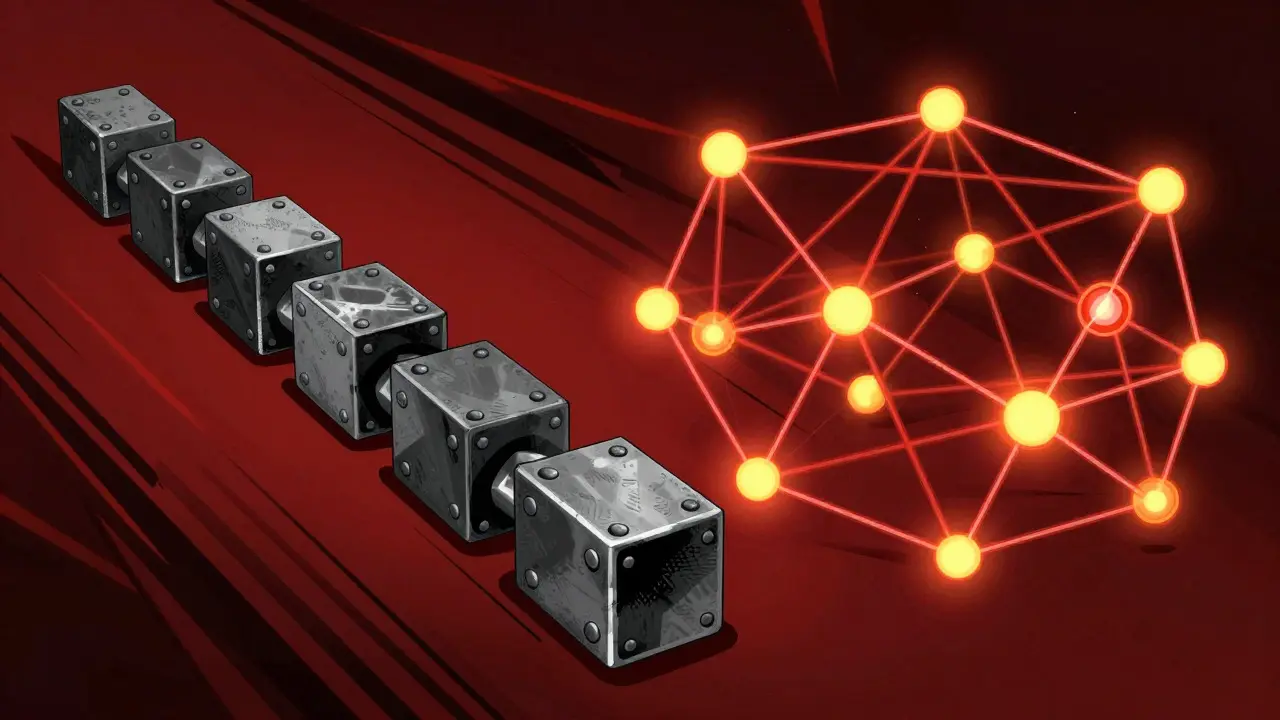
The biggest differentiator is the structure. A blockchain forces data into blocks that are chained together chronologically. This linear approach is great for immutability but terrible for speed. If you want to add a new block, you have to wait for the previous one to be finalized. In contrast, general DLT systems can use Directed Acyclic Graphs (DAGs) or other structures where transactions don't necessarily have to follow a strict line. They can happen in parallel. This makes DLT significantly faster and more scalable for high-volume enterprise needs.
Then there’s the issue of tokens. In public blockchains like Bitcoin or Ethereum, you need miners or validators who are incentivized by cryptocurrency rewards to keep the network secure. In a private DLT network used by, say, a consortium of banks, the participants already trust each other enough (or have legal contracts) to run the network. They don’t need to burn electricity solving math puzzles or pay gas fees in ETH. This removes a huge layer of complexity and cost.
How Consensus Works Without the Mining Rig
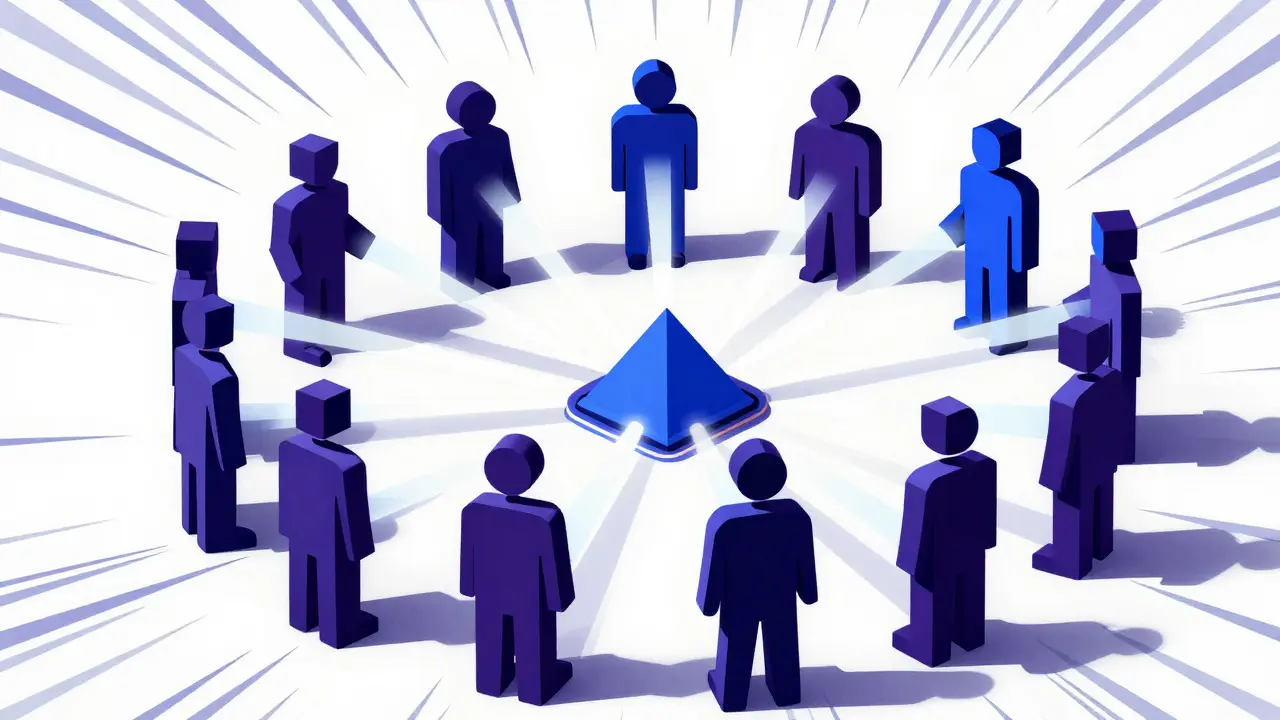
If you strip away the mining, how do these networks agree on the truth? This is the magic of Consensus Algorithms. In early blockchains, Proof-of-Work (PoW) was king because nobody trusted anyone. You had to prove you did work to prevent double-spending. But in modern DLT, especially in enterprise settings, we use lighter, faster methods.
Consider Practical Byzantine Fault Tolerance (PBFT). This algorithm allows nodes to vote on the validity of a transaction. As long as two-thirds of the nodes agree, the transaction is committed. It’s fast, energy-efficient, and doesn’t require a token economy. Another example is Raft Consensus, which is simpler and focuses on leader election to maintain consistency. These mechanisms allow DLT networks to process hundreds or even thousands of transactions per second (TPS), compared to Bitcoin’s roughly 7 TPS. For a company like Visa or Mastercard, which processes tens of thousands of transactions per second, this scalability is the only reason DLT is viable.
Real-World Applications Beyond Crypto
While Bitcoin grabbed the headlines, the real money and innovation in DLT are happening in the shadows of enterprise infrastructure. Here is where the technology is actually being deployed in 2026.
1. Supply Chain Transparency
Imagine buying a pair of luxury sneakers. With DLT, every step of that shoe’s journey-from the cotton farm in India to the factory in Vietnam, to the shipping port in Rotterdam, and finally to the store in Edinburgh-is recorded on an immutable ledger. Retailers like Walmart and Maersk have piloted these systems to track goods. If a batch of food is contaminated, they can trace it back to the source in seconds, not weeks. This isn’t about speculation; it’s about efficiency and consumer safety.
2. Cross-Border Payments
Traditional international bank transfers rely on SWIFT, a messaging system that is notoriously slow and expensive due to multiple intermediaries. Banks like BBVA have participated in consortia using DLT platforms (like Hyperledger) to settle trades instantly. By sharing a single ledger, Bank A and Bank B can update their balances simultaneously without waiting for clearinghouses to reconcile differences overnight. This reduces settlement time from days to minutes and cuts costs significantly.
3. Digital Identity and Credentials
We currently carry our identity in fragmented silos: a passport, a driver’s license, university transcripts, medical records. DLT enables Self-Sovereign Identity (SSI). You hold your credentials in a digital wallet, and when you need to prove you are over 21 or graduated from a specific university, you share a cryptographic proof without revealing your entire history. Governments in Estonia and Singapore have been leaders here, integrating DLT into national ID systems to reduce bureaucracy and fraud.
4. Smart Contracts in Trade Finance
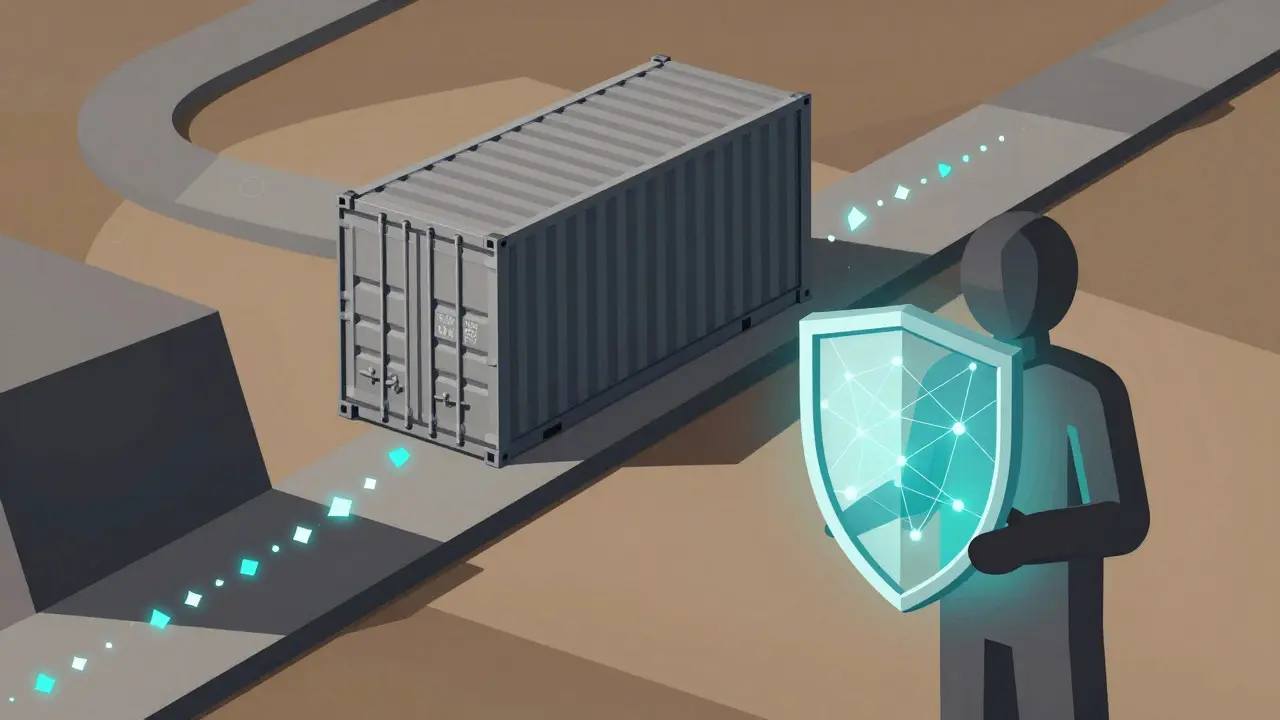
Trade finance involves letters of credit, bills of lading, and insurance documents. Historically, this meant piles of paper and manual verification. DLT platforms allow for Smart Contracts-self-executing code that triggers payments when conditions are met. For example, when a shipping container’s IoT sensor confirms arrival at the port, the smart contract automatically releases payment to the supplier. This automates trust and reduces administrative overhead by up to 80%.
The Challenges Holding DLT Back
It’s not all smooth sailing. Despite the technical superiority of many DLT architectures over traditional blockchains, adoption faces significant hurdles.
Interoperability is the biggest headache. Right now, we have dozens of DLT platforms-Hyperledger Fabric, Corda, Iroha, Quorum-and they don’t talk to each other well. If Bank A uses Corda and Bank B uses Fabric, connecting their ledgers is like trying to plug a USB-C cable into a floppy disk drive. Industry standards are emerging, but a unified protocol suite is still years away.
Regulatory Uncertainty also looms large. While DLT itself is just software, the data it holds is subject to laws like GDPR in Europe. The "right to be forgotten" clashes directly with the "immutable" nature of DLT. Developers are working on solutions like off-chain storage with on-chain hashes, but legal clarity is still evolving.
Cultural Resistance within legacy institutions cannot be ignored. Moving from a centralized SQL database to a distributed ledger requires a fundamental shift in mindset. IT departments have to retrain staff, and executives have to justify the ROI of replacing systems that "work fine" in their eyes. Change management is often harder than the coding.
The Future Landscape: What Comes Next?
Looking ahead from mid-2026, the trend is clear: specialization. We are moving away from "one-size-fits-all" blockchains toward purpose-built DLT solutions. We will see more hybrid models where public blockchains handle transparency for consumers, while private DLT layers handle the heavy lifting for enterprise data.
We are also seeing the rise of Layer 2 scaling solutions and interoperability protocols that act as bridges between different DLT networks. The goal is a "internet of value" where assets and data flow seamlessly across different ledgers without friction. As quantum computing advances, post-quantum cryptography will become a critical feature for DLT systems to ensure long-term security.
For businesses, the lesson is simple: don’t just ask "Should we use blockchain?" Ask "Do we need a distributed ledger, and if so, which architecture fits our privacy, speed, and governance needs?" The answer might surprise you, and it likely won’t involve Bitcoin.
Is DLT the same as blockchain?
No. Blockchain is a specific type of DLT that arranges data in chronological blocks. DLT is the broader umbrella term that includes blockchain as well as other structures like Directed Acyclic Graphs (DAGs) and Hashgraphs. All blockchains are DLTs, but not all DLTs are blockchains.
Why would a company choose DLT over a traditional database?
Companies choose DLT when they need to share data with multiple external parties who don't fully trust each other. Traditional databases are centralized and controlled by one entity. DLT provides a shared source of truth that is tamper-resistant, transparent (to configured levels), and eliminates the need for a costly third-party intermediary to reconcile records.
Does DLT require cryptocurrency to function?
Not necessarily. While public blockchains like Bitcoin use tokens to incentivize miners, many enterprise DLT systems operate without any native currency. Participants in a private consortium may use legal agreements or existing business relationships to maintain the network, using consensus mechanisms like PBFT that don't require token rewards.
What are the main benefits of using DAG-based DLT?
Directed Acyclic Graph (DAG) based DLTs offer higher scalability and faster transaction speeds than traditional blockchains. Because transactions don't need to be grouped into sequential blocks, they can be processed in parallel. This makes DAGs ideal for high-frequency applications like microtransactions or IoT device communications.
How does DLT ensure data privacy?
DLT systems offer flexible privacy controls. Unlike public blockchains where all data is visible, private or permissioned DLTs restrict access to authorized participants only. Additionally, techniques like zero-knowledge proofs allow users to verify the validity of a transaction without revealing the underlying data, ensuring compliance with regulations like GDPR.