US CBDC Halt: Why There Is No Digital Dollar Under Trump
 Oct, 5 2026
Imagine waking up to find that the most powerful economy on Earth has officially decided it doesn't want a digital version of its own money. That is exactly what happened in early 2025 when President Donald Trump signed Executive Order 14178, effectively halting all U.S. government efforts to create or promote a Central Bank Digital Currency (CBDC). For years, the Federal Reserve had been quietly experimenting with what many called "FedCoin," but this executive action slammed the brakes. It wasn't just a pause; it was a complete reversal of policy from the previous administration, which had treated digital currency research as a top priority.
If you have been following crypto news, you might wonder why this matters. After all, we already have Bitcoin and stablecoins like USDT and USDC. But a CBDC is different. It is sovereign money issued by the central bank, not a private company. By stopping this project, the United States has positioned itself as an outlier among major global economies. While China, Europe, and even neighbors like Canada are pushing forward with their own digital currencies, the U.S. is betting entirely on private sector innovation instead. This article breaks down exactly what happened, why the White House made this call, and what it means for your wallet and the future of finance.
The Policy Flip: From Urgency to Prohibition
To understand the halt, you have to look at where things stood before. In 2022, under President Biden, Executive Order 14067 placed the "highest urgency" on researching a U.S. CBDC. The goal was clear: figure out if the U.S. needed a digital dollar to stay competitive. The Federal Reserve Chair, Jerome Powell, even stated he would never issue a CBDC without congressional approval, signaling caution but not rejection. The machinery was moving. An interagency working group involving the Treasury, the White House, and the National Security Council was active, trying to shape how other countries built their digital currencies so the U.S. could influence international standards.
Then came January 2025. Executive Order 14178 didn't just slow things down; it prohibited federal agencies from pursuing a CBDC. The language was stark. The administration argued that a government-controlled digital dollar could threaten financial privacy and give the state too much power over individual transactions. This wasn't a technical delay due to coding bugs or infrastructure issues. It was a philosophical and political decision. The argument was that private companies, not the government, should drive financial innovation. This shift created immediate uncertainty for banks and fintech firms that had been preparing for a dual-track system where both private stablecoins and a public digital dollar coexisted.
Global Context: The U.S. Stands Alone
While Washington hit the stop button, the rest of the world kept hitting accelerate. As of early 2025, 134 countries and currency unions were actively engaged in CBDC work. That is a huge jump from just 114 countries in 2023. Among these, 72 nations are in advanced stages-either piloting, developing, or launching their digital currencies. Currently, 53 countries are running active pilots, and 11 have fully launched them. The Bahamas, Nigeria, Jamaica, and Zimbabwe were among the first to go live, proving that smaller economies can move faster than giants.
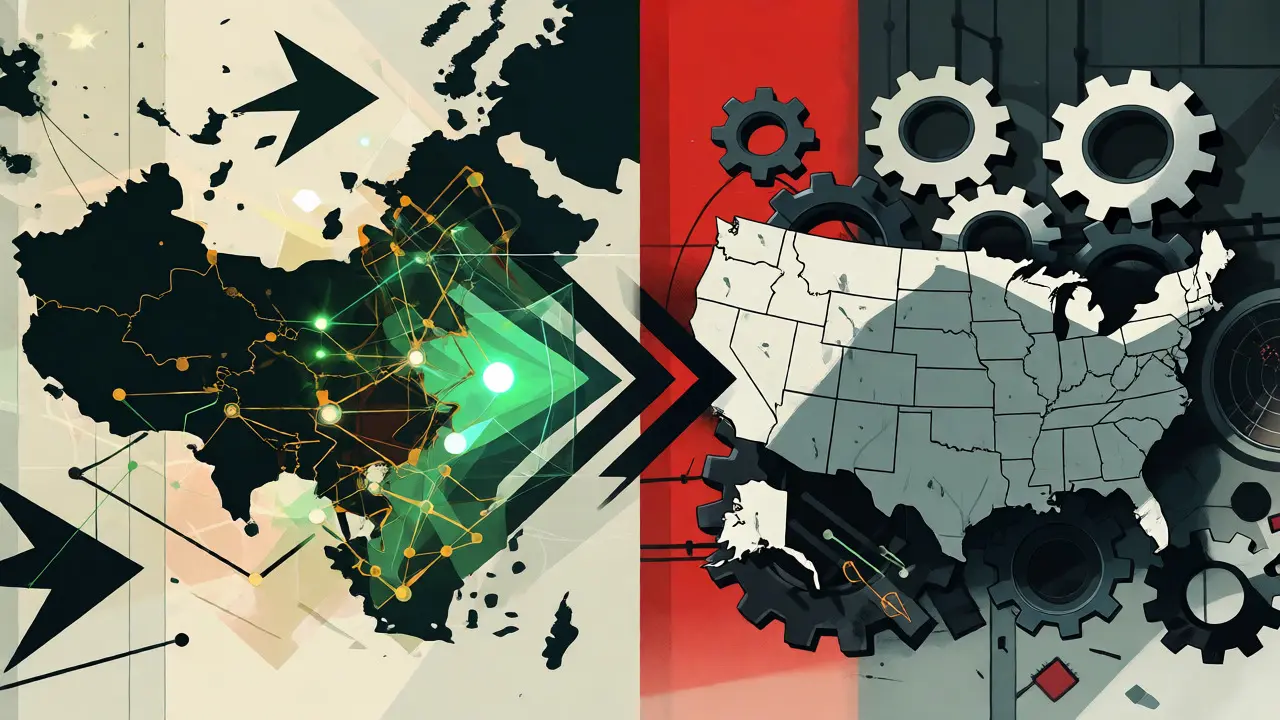
The contrast within the G-20 is particularly striking. Nineteen of the twenty largest economies are exploring CBDCs. Sixteen are already in development or pilot phases. Look at the map: Europe is pushing ahead with the digital euro, aiming to settle transactions on distributed ledger technology. China’s digital yuan is already widely used in retail settings. Even traditional allies like the UK and Japan are deep in the development phase. The U.S. is now grouped with Argentina and Canada in the "early exploration" category, though unlike those two, the U.S. has explicitly halted progress. This isolation risks leaving the dollar behind in cross-border payment systems, which are currently dominated by legacy infrastructure like SWIFT.
| Region/Country | Status | Key Driver |
|---|---|---|
| United States | Halted / Prohibited | Privacy concerns, private sector preference |
| European Union | Pilot Phase | Sovereignty, modernization |
| China | Launched / Widespread Use | Financial inclusion, surveillance control |
| Brazil | Pilot Phase | Cross-border efficiency |
| UK | Development Phase | Competition with stablecoins |
Why the Ban? Privacy and Power Concerns
The core reason behind the ban isn't technical incompetence; it's fear of surveillance. Critics of CBDCs argue that a programmable digital dollar gives the government unprecedented visibility into every transaction. Unlike cash, which leaves no trace, a CBDC records everything. In the U.S., banks already file over 26 million reports annually to the government on customer activity. Adding a CBDC could expand this monitoring capability exponentially. The concern is that the government could theoretically freeze assets or restrict spending based on algorithmic rules-a feature known as programmability.
This resonates strongly with American political values, particularly regarding civil liberties. The idea of a "digital panopticon" where the state knows exactly what you buy and when you buy it strikes a nerve. Furthermore, there is the risk of disintermediation. If people hold digital dollars directly with the Federal Reserve, they might pull deposits out of commercial banks. Banks rely on those deposits to lend money and drive the economy. A run on commercial banks during a crisis could be faster and more severe if citizens can click a button to move funds to the Fed. By banning the CBDC, the administration protected the traditional banking model and alleviated fears of excessive state control.

The Rise of Private Stablecoins
With the door closed on a public digital dollar, the spotlight shifted entirely to private stablecoins. These are cryptocurrencies pegged to the value of the U.S. dollar, issued by private companies like Circle (USDC) or Tether (USDT). The new regulatory environment emphasizes clarity for these private assets rather than creating a government alternative. Financial institutions see this as an opportunity. State Street, a major custodian bank, noted that having high-quality digital cash is crucial for scaling institutional interest in tokenized assets. Without a FedCoin, stablecoins become the de facto digital dollars for businesses and investors.
However, this comes with risks. Stablecoins are only as good as their reserves. If a stablecoin issuer fails, users lose their money unless there is insurance or regulation protecting them. The U.S. approach essentially outsources the creation of digital money to the private sector, hoping that market competition will ensure stability and innovation. Consortia like Fnality International, where State Street is a minority investor, are stepping in to provide settlement solutions using blockchain tech, bridging the gap left by the absent CBDC. This creates a unique ecosystem where the U.S. dollar remains dominant globally, but its digital form is privately managed rather than publicly issued.
Economic Implications and Future Outlook
What does this mean for the average person? In the short term, probably nothing dramatic. You won't notice a difference in your daily purchases. But long-term, the U.S. is betting that private innovation will outpace government bureaucracy. The global value of CBDC transactions is projected to hit $213 billion in 2025, up from $100 billion in 2023. By opting out, the U.S. misses out on potential efficiencies in cross-border payments, which currently take days and cost significant fees. Other countries using CBDCs may develop faster, cheaper ways to send money internationally, potentially eroding the dollar's dominance in trade settlements.
There is also the question of monetary policy tools. Central banks elsewhere are exploring how CBDCs can help deliver stimulus checks instantly or implement negative interest rates more effectively. The U.S. sticks to traditional methods. If inflation spikes again, the Fed lacks the direct digital channel that other central banks might use to fine-tune the economy. Whether this disadvantage becomes critical depends on how quickly the rest of the world adopts these technologies and whether private U.S. stablecoins can match the trust and liquidity of a sovereign currency.
Is there a digital dollar right now?
No, there is no official U.S. Central Bank Digital Currency (CBDC) in circulation. While private stablecoins like USDC and USDT exist and function similarly to digital dollars, they are issued by private companies, not the Federal Reserve. The U.S. government has officially halted the development of a public digital dollar via Executive Order 14178.
Why did the U.S. stop developing a CBDC?
The primary reasons cited were concerns over financial privacy, potential government surveillance, and the desire to let the private sector lead innovation. Policymakers feared that a government-issued digital currency could give the state too much control over individual transactions and disrupt the traditional banking system by pulling deposits away from commercial banks.
How does the U.S. CBDC halt affect global finance?
It positions the U.S. as an outlier among major economies. While countries like China and EU members advance their digital currencies, the U.S. relies on private stablecoins. This could impact the competitiveness of the U.S. dollar in cross-border payments and limit the Fed's ability to use digital tools for monetary policy compared to other central banks.
Can stablecoins replace a CBDC?
Stablecoins serve a similar function as digital dollars but carry different risks. They depend on the solvency of private issuers and the quality of their reserves. While they offer speed and programmability, they lack the full faith and credit backing of the U.S. government that a CBDC would have. Regulatory frameworks are evolving to mitigate these risks.
Will the U.S. ever launch a digital dollar?
It is possible in the future, but unlikely under the current political climate. Any revival would require a change in administration or a compelling economic crisis that makes the benefits of a CBDC undeniable. For now, the focus is on regulating private digital assets rather than issuing a sovereign one.