Utility Token Regulations and Compliance: A 2026 Guide
 Aug, 3 2026
It is August 2026, and the days of launching a digital asset without reading the fine print are officially over. If you are building or investing in utility tokens, which are digital assets designed to provide access to specific functionalities within a decentralized application rather than representing ownership stakes, you are navigating a legal minefield that has changed drastically since the early 2010s. The line between a compliant utility tool and an unregistered security is thinner than ever, and regulators on both sides of the Atlantic are watching closely.
The core challenge isn't just technical; it is legal. You can write perfect smart contracts on Ethereum or Solana, but if your tokenomics imply profit expectations from centralized efforts, you might be looking at enforcement actions from the SEC or fines under Europe's MiCA regulation. This guide breaks down exactly how to structure, classify, and maintain compliance for utility tokens in the current regulatory environment.
Defining the Utility Token vs. Security Token Distinction
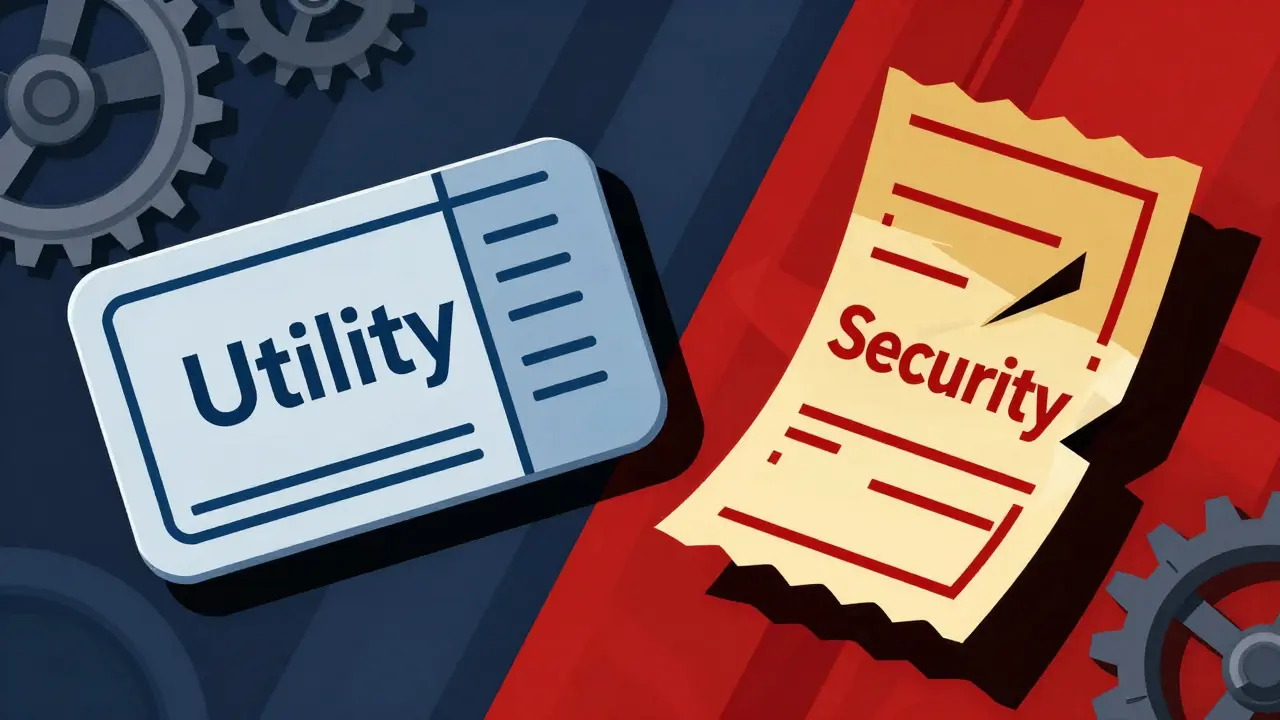
Before diving into regulations, we need to nail down what a utility token actually is. In simple terms, a utility token is a cryptocurrency used to pay for services or access features within a specific blockchain ecosystem. Think of it like a subway ticket or a gym membership card, but digitized and tradable. Its value should come from its usefulness-demand for the service it unlocks-not from promises of future profits.
This stands in sharp contrast to a security token, which represents an investment contract where holders expect profits derived from the efforts of others. Security tokens often grant equity, dividends, or revenue sharing. Utility tokens do not. They grant access. For example, the Basic Attention Token (BAT) allows users to pay for ad-free browsing on the Brave browser and rewards advertisers for attention. No one holds BAT expecting a dividend from Brave Software; they hold it because they want to use the network. That functional purpose is your primary defense in any regulatory audit.
| Feature | Utility Token | Security Token |
|---|---|---|
| Purpose | Access to services/products | Investment/Ownership stake |
| Value Driver | Network usage demand | Underlying asset performance |
| Regulatory Status (US) | Often exempt (if truly utility) | Subject to Securities Act |
| Governance | Decentralized (DAO preferred) | Centralized management |
| Example | Filecoin (storage), BAT (ads) | Tech Stock Tokens, Real Estate NFTs |
Navigating US Regulations: The Howey Test and New Legislation
In the United States, the golden rule remains the Howey Test, a legal framework established by the Supreme Court to determine if an arrangement constitutes an investment contract. To pass as a non-security utility token, your project must fail this test. Specifically, there should be no expectation of profits derived from the efforts of a central promoter. By 2026, courts have begun to offer more nuance here. If your network is sufficiently decentralized-if a Decentralized Autonomous Organization (DAO) controls the roadmap and no single entity pulls the strings-you have a stronger case for exemption.
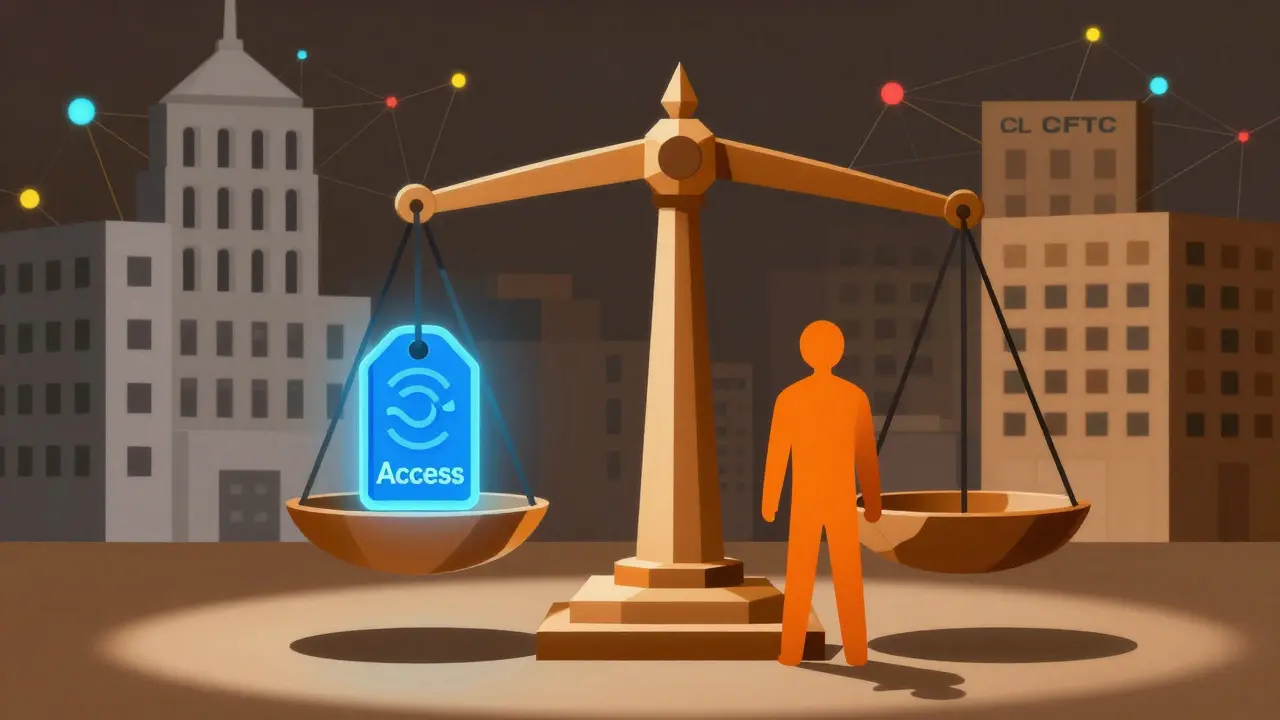
Legislative changes have also shifted the landscape. The Financial Innovation and Technology for the 21st Century (FIT) Act has moved through committee discussions, proposing a dual-regulatory framework. Under this model, the Securities and Exchange Commission (SEC) would regulate tokens classified as securities, while the Commodity Futures Trading Commission (CFTC) would oversee tokens classified as commodities. While full passage timelines fluctuate with political administrations, the trend is clear: regulators want clarity. They want to know who is responsible. If your token acts like a commodity (like Bitcoin or many utility tokens), the CFTC’s lighter touch is preferable to the SEC’s strict disclosure requirements.
Additionally, the Stablecoin Trust Act, projected to influence markets heavily in 2025 and beyond, introduced federal licensing for stablecoins. While this primarily targets pegged assets, it sets a precedent for reserve transparency and auditing that spills over into general utility token compliance. Even if you aren’t issuing a stablecoin, adopting similar transparency standards can serve as a powerful goodwill gesture to regulators.
European Compliance: Understanding MiCA
If you are operating in or targeting users in the European Union, you cannot ignore MiCA (Markets in Crypto-Assets), the comprehensive EU regulation governing crypto-assets, including utility tokens, effective from late 2023 onwards. MiCA provides a unified passport for crypto businesses across the EU, but it comes with strict conditions. For utility tokens, the key requirement is the publication of a detailed whitepaper before offering the token to the public.
This whitepaper isn't just marketing fluff; it’s a legal document. It must clearly outline the rights and obligations of token holders, the technology behind the token, and the environmental impact of the consensus mechanism. Crucially, MiCA requires that the utility token is genuinely usable for its stated purpose at the time of issuance. You can’t sell a token promising access to a dApp that doesn’t exist yet-that looks too much like an unregistered security offering. The European approach favors consumer protection and market integrity, meaning transparency is non-negotiable.
Structuring Compliant Tokenomics
Your tokenomics-the economic design of your token-are perhaps the most critical factor in regulatory compliance. Regulators look at supply, distribution, and vesting schedules to gauge centralization. Here is how to structure them for maximum safety:
- Avoid Centralized Vesting: If the founding team holds 40% of the supply locked up for two years, it suggests a future dump based on managerial effort. Distribute more widely earlier, or lock team tokens in multi-sig wallets controlled by the DAO.
- Focus on Consumption: Design mechanisms that burn or remove tokens from circulation when used for services. This ties value to utility (usage) rather than speculation.
- Decentralize Governance Early: Transition control to a DAO as quickly as possible. Document every step of this decentralization. Regulators view active, distributed governance as evidence that the "efforts of others" (a key Howey Test criterion) are no longer centralized.
- Limit Speculative Features: Avoid staking rewards that look like interest payments. Instead, frame rewards as incentives for network participation (e.g., providing liquidity or validating transactions).
Professional legal opinion services are essential here. Don’t guess. Hire firms specializing in blockchain law to review your tokenomics against the criteria of the Howey Test and MiCA. A formal legal opinion letter can be a lifesaver during an audit, proving you acted in good faith with expert guidance.
Global Perspectives: MENA and Emerging Markets
While the US and EU dominate headlines, other regions are developing distinct frameworks. The Middle East and North Africa (MENA) region, particularly hubs like Dubai and Abu Dhabi, has become attractive for crypto projects seeking clearer, business-friendly regulations. These jurisdictions often provide sandbox environments where projects can launch utility tokens under supervised conditions, gaining regulatory approval faster than in traditional Western markets. However, these approvals are usually local. Operating globally still requires a multi-jurisdictional strategy.
Asia presents a mixed bag. Japan has clear guidelines for utility tokens, requiring registration as a provider of exchange services if trading occurs. South Korea has implemented strict real-name banking systems for crypto accounts. Meanwhile, China maintains a restrictive stance on most crypto activities, though it explores digital currency innovations separately. Your compliance strategy must map out where your users are located and apply the strictest relevant rules to avoid cross-border enforcement issues.
Technical Enforcement: Smart Contracts as Compliance Tools
One advantage of blockchain is that compliance can be coded. You don’t have to rely solely on legal documents; you can embed restrictions directly into your smart contracts. This is known as "programmable compliance."
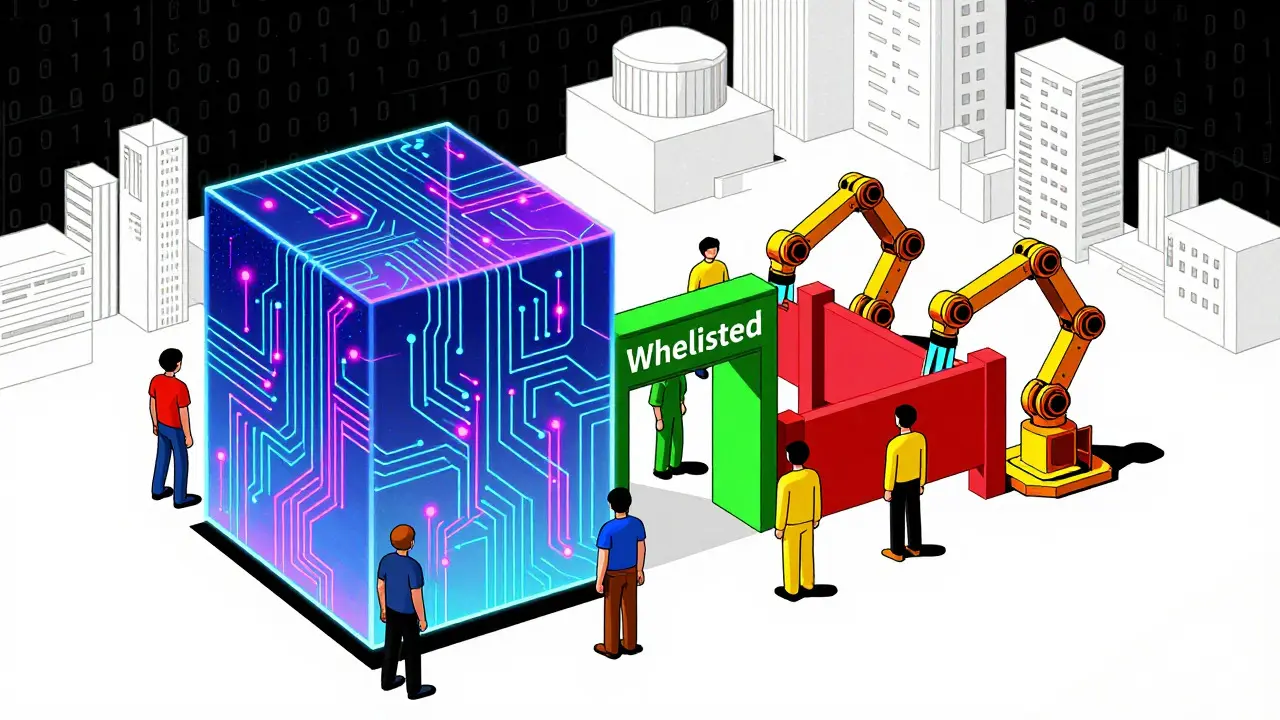
For instance, you can implement whitelisting mechanisms that allow only verified addresses to receive or transfer tokens. This helps prevent sales to restricted jurisdictions (like sanctioned countries). You can also code in transfer limits or cooling-off periods to reduce short-term speculative trading, reinforcing the narrative that your token is for long-term utility. While these measures add complexity to development, they demonstrate to regulators that you are actively managing risk and adhering to anti-money laundering (AML) standards.
Future Outlook: What to Expect in 2027 and Beyond
The regulatory landscape will continue to evolve. Expect increased focus on decentralization metrics. Regulators may start using quantitative tools to measure how decentralized a network truly is, looking at node distribution, governance participation, and developer diversity. Projects that appear decentralized on paper but are controlled by a small group of insiders will face scrutiny.
Furthermore, the integration of Real-World Assets (RWA) into blockchain ecosystems blurs the lines further. As utility tokens begin to interact with tokenized real estate or commodities, hybrid models will emerge. These hybrids will likely require layered compliance, satisfying both utility token rules and security/tokenized asset regulations. Stay agile. Monitor legislative updates in your key markets, engage with legal counsel regularly, and prioritize transparency above all else. In 2026, trust is your most valuable asset-and compliance is how you earn it.
What is the main difference between a utility token and a security token?
A utility token provides access to a product or service within a blockchain ecosystem, deriving value from network usage. A security token represents an investment contract, offering ownership stakes, dividends, or expected profits from the efforts of a central team. The distinction determines whether securities laws apply.
How does the Howey Test apply to utility tokens in the US?
The Howey Test determines if an asset is a security. For a utility token to avoid classification as a security, it must not involve an investment of money in a common enterprise with an expectation of profits derived from the efforts of others. Demonstrating true decentralization and functional utility is key to passing this test.
What are the key compliance requirements under MiCA in Europe?
MiCA requires issuers of utility tokens to publish a comprehensive whitepaper detailing the technology, rights, risks, and environmental impact. The token must be usable for its intended purpose at the time of issuance, and issuers must register with national competent authorities in their home EU member state.
Can I enforce regulatory compliance through smart contracts?
Yes, programmable compliance allows you to embed rules directly into smart contracts. This includes whitelisting verified users, restricting transfers to sanctioned jurisdictions, implementing vesting schedules, and limiting trading volumes to reduce speculation, thereby supporting your legal compliance posture.
Why is decentralization important for regulatory compliance?
Decentralization reduces reliance on a central promoter, helping utility tokens avoid classification as securities under tests like Howey. Regulators view networks governed by DAOs with distributed voting and diverse node operators as less risky and more aligned with true utility purposes.
Do I need a legal opinion for my utility token?
Highly recommended. A formal legal opinion from a specialist firm assesses your tokenomics, whitepaper, and structure against current laws. It provides documentation of good faith compliance, which can protect you during audits or enforcement actions, especially given the evolving nature of crypto regulations.