What is Distributed Ledger Technology in Blockchain? A Clear Guide
 Nov, 8 2026
You’ve heard the terms Distributed Ledger Technology (DLT) and blockchain thrown around like they’re the same thing. They aren’t. Think of it this way: all blockchains are distributed ledgers, but not all distributed ledgers are blockchains. It’s a square-and-rectangle situation that trips up even seasoned tech investors.
If you’re trying to figure out what actually powers Bitcoin, or why banks are experimenting with systems that look nothing like crypto, you need to understand the underlying architecture. This isn’t just jargon; it’s the difference between a centralized database and a peer-to-peer network that no single entity can control. Let’s break down exactly what DLT is, how it differs from blockchain, and why it matters for your wallet or business.
The Core Concept: What Is Distributed Ledger Technology?
Distributed Ledger Technology is a method of recording information across multiple locations simultaneously, without relying on a central administrator or trusted third party. Unlike traditional databases where one server holds the "source of truth," a DLT replicates data across many nodes (computers) in a network. Every node maintains an identical copy of the ledger. When a transaction happens, it’s broadcast to everyone. The network then uses a consensus algorithm to agree that the transaction is valid before updating every copy at once.
This structure solves the "double-spend" problem in digital environments without needing a bank to verify who owns what. In a centralized system, if the main server goes down or gets hacked, the whole system fails. In a DLT, there is no single point of failure. If one node drops out, the others keep running. It’s resilient by design.
How Does It Actually Work?
Imagine a group of friends sharing a spreadsheet. Normally, one person owns the file, and others ask permission to edit it. With DLT, everyone has their own copy of the spreadsheet. If Alice sends Bob $10, she announces it to the group. Everyone checks their own copy to ensure Alice has $10. If yes, they all update their spreadsheets to show Bob now has $10 more. No manager needed.
Technically, this process involves three key steps:
- Proposal: A user initiates a transaction, which is cryptographically signed.
- Broadcast: The transaction is sent to all nodes in the Peer-to-Peer (P2P) network.
- Consensus: Nodes independently validate the transaction using an algorithm (like Proof of Work or Proof of Stake). Once the majority agrees, the transaction is added to the ledger.
Once recorded, the data is immutable. You can’t delete it or change history. You can only add new entries. This append-only feature creates a permanent audit trail.
DLT vs. Blockchain: Where’s the Difference?
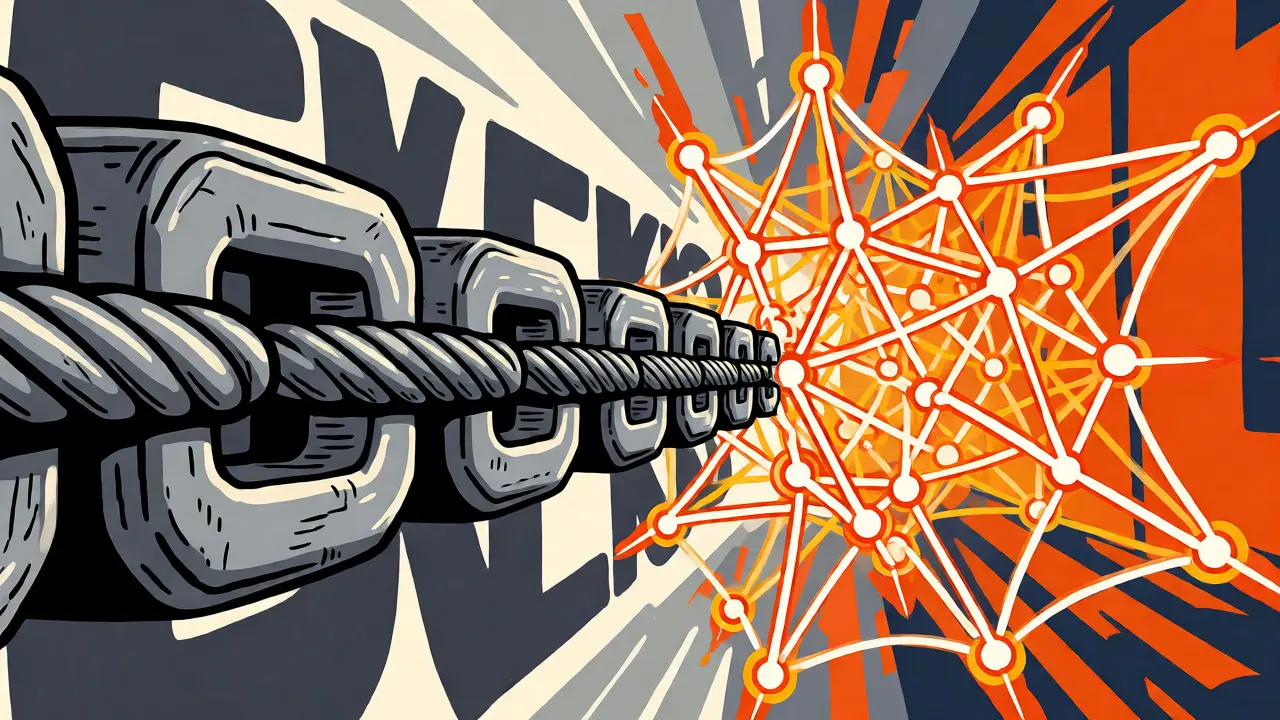
This is the most common confusion. Blockchain is a specific type of DLT where data is stored in sequential blocks linked together using cryptographic hashes. Each block contains a timestamp, transaction data, and the hash of the previous block. This chain structure ensures that altering one block breaks the link to all subsequent blocks, making tampering obvious.
However, DLT is the broader category. Other types of DLT exist that don’t use blocks. For example, Directed Acyclic Graphs (DAGs), used by projects like IOTA or Hedera Hashgraph, arrange transactions in a web-like structure rather than a linear chain. These systems often claim higher scalability because they don’t require miners to bundle transactions into fixed-size blocks.
| Feature | Traditional Database | Blockchain (Type of DLT) | Other DLT (e.g., DAG) |
|---|---|---|---|
| Control | Centralized (Single Admin) | Decentralized (No Admin) | Decentralized or Federated |
| Data Structure | Rows and Columns | Linear Chain of Blocks | Graph / Web of Transactions |
| Trust Model | Trust the Administrator | Trust the Code/Math | Trust the Code/Math |
| Speed/Scalability | Very High | Variable (Often Slower) | Potentially Higher Throughput |
| Immutability | Data Can Be Edited | Immutable History | Immutable History |
Key Characteristics That Make DLT Powerful
Why would anyone bother with this complex setup? Because it offers specific guarantees that traditional systems struggle to provide.
Transparency: In public DLTs, anyone can view the entire history of transactions. You don’t have to trust the company saying they paid their suppliers; you can check the ledger yourself. This reduces fraud and builds trust among strangers.
Security: Because data is replicated across thousands of nodes, hacking one computer doesn’t compromise the network. To alter the ledger, an attacker would need to compromise more than 50% of the network simultaneously (in many models), which is computationally expensive and difficult.
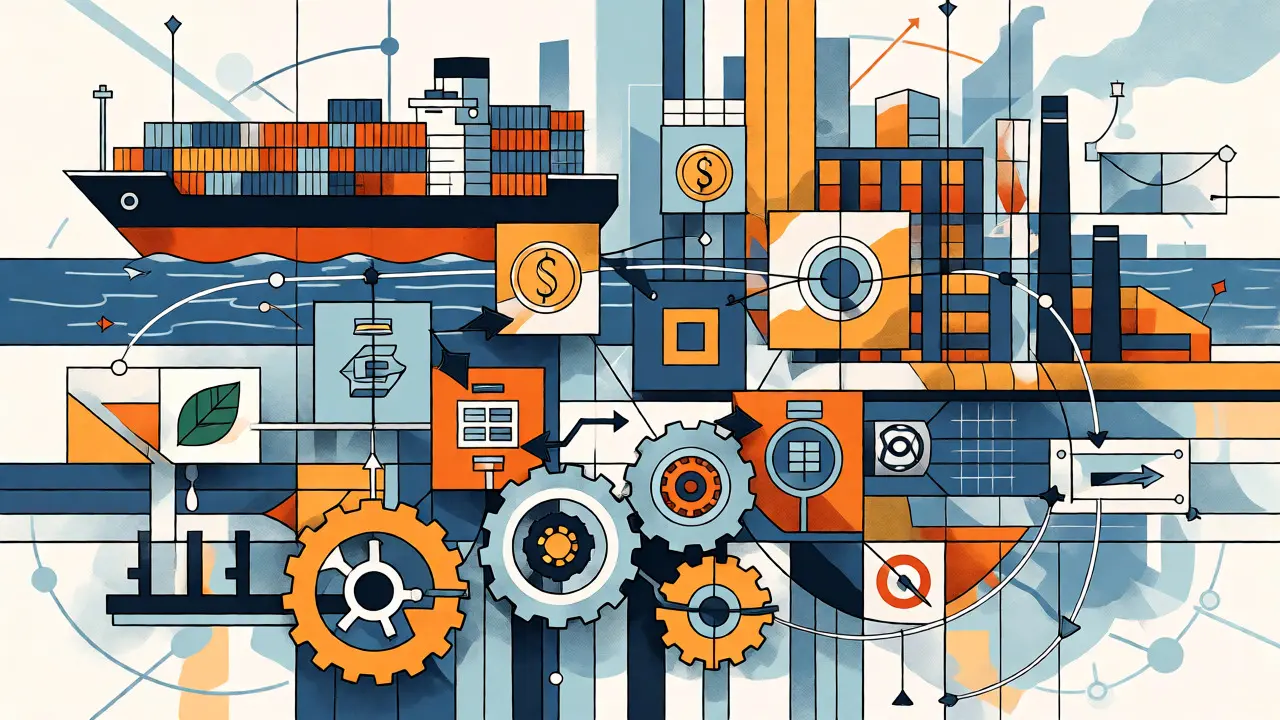
Automation via Smart Contracts: Many DLT platforms, like Ethereum, support smart contracts. These are self-executing codes that trigger actions when conditions are met. For instance, if a shipment arrives at a port (verified by IoT sensors), a smart contract could automatically release payment to the supplier. No paperwork, no delays.
Real-World Applications Beyond Crypto
While Bitcoin popularized DLT, the technology is finding homes in industries that need shared records but don’t want to rely on a single middleman.
In supply chains, companies like Walmart use DLT to track food products. If lettuce gets contaminated, they can trace its origin in seconds rather than days. Previously, this took weeks of phone calls and paper trails.
In finance, institutions are testing private DLTs for cross-border payments. SWIFT messages can take days to settle. A DLT-based system allows near-instant settlement between banks, reducing liquidity costs. The Financial Stability Board (FSB) has noted these developments as critical for future financial infrastructure.
Healthcare is another frontier. Patient records are currently siloed in different hospitals. A consented DLT could allow patients to share their full medical history securely with any doctor, anywhere, without carrying physical files.
Challenges and Limitations
It’s not all sunshine and decentralization. DLT comes with trade-offs.
Scalability: Public blockchains like Bitcoin handle about 7 transactions per second. Visa handles thousands. While newer DLTs improve this, high throughput remains a hurdle for global adoption.
Energy Consumption: Proof of Work consensus (used by Bitcoin) requires massive computational power. Although Ethereum switched to Proof of Stake in 2022, significantly reducing energy use, older DLTs still face environmental scrutiny.
Complexity: Setting up and maintaining a DLT network requires specialized skills. Integration with legacy systems is often messy. Companies frequently underestimate the difficulty of migrating from SQL databases to distributed architectures.
Final Thoughts
Distributed Ledger Technology is more than just the engine behind cryptocurrency. It’s a fundamental shift in how we record value and agreements. By removing the need for a central referee, it enables trustless collaboration on a global scale. Whether you’re looking at Bitcoin, Ethereum, or enterprise solutions like Hyperledger, understanding the distinction between the broad concept of DLT and the specific implementation of blockchain helps you cut through the hype. The technology is maturing, moving from experimental pilots to core infrastructure for finance, logistics, and beyond.
Is blockchain the same as distributed ledger technology?
No. Blockchain is a specific type of distributed ledger technology. All blockchains are DLTs, but not all DLTs are blockchains. Other forms include Directed Acyclic Graphs (DAGs) and hashgraphs, which use different data structures to achieve consensus.
Do distributed ledgers require a central authority?
Typically, no. The defining feature of most DLTs is decentralization. Participants maintain their own copies of the ledger and reach agreement through consensus algorithms, eliminating the need for a single trusted intermediary like a bank or government agency.
Can data in a distributed ledger be changed?
Generally, no. Most DLTs operate on an append-only basis. Once a transaction is validated and added to the ledger, it becomes part of the permanent history. Changing past data would require recalculating all subsequent blocks and gaining consensus from the network, which is computationally prohibitive.
What is a consensus mechanism in DLT?
A consensus mechanism is a protocol that allows distributed nodes to agree on the state of the ledger. Common examples include Proof of Work (mining), Proof of Stake (validators staking coins), and Practical Byzantine Fault Tolerance (PBFT). These ensure that all copies of the ledger remain synchronized and accurate.
Are distributed ledgers secure?
Yes, they offer strong security features due to cryptography and replication. An attacker would need to compromise a majority of the network nodes simultaneously to alter the ledger. However, security also depends on the specific consensus algorithm and the robustness of the underlying code.