What is GAMA Coin (GAMA)? Tokenomics, Risks, and Price Analysis
 Jul, 19 2026
You’ve probably seen the ticker GAMA flash across a screen or heard whispers in a Discord channel about its potential. But what actually is GAMA Coin? Is it the next big thing in Web3 gaming, or just another speculative asset with thin liquidity? If you are looking at your portfolio right now, you need more than just hype. You need to understand the mechanics, the risks, and the reality of where this token sits in the crowded crypto market.
GAMA Coin is the utility token for the GAMA Web3 gaming platform. It operates on the Solana blockchain, leveraging the network’s speed and low transaction costs. The core promise of GAMA is simple: play games, win rewards, and contribute to a deflationary ecosystem where losing players burn tokens. While the concept sounds appealing, the execution and current market data tell a much more complex story. Let’s break down exactly how it works, why the numbers look so messy, and what that means for you.
How GAMA Coin Works: The Deflationary Model
To understand GAMA, you have to look past the price chart and look at the tokenomics. Most gaming tokens suffer from inflation-too many new coins entering the supply as players earn rewards, which drives the price down. GAMA attempts to solve this with a deflationary mechanism.
The model is built on scarcity. According to official documentation from late 2025, the total supply is capped. When you play games on the platform, winning results in earning GAMA tokens. However, when you lose, tokens are burned. This creates a controlled reduction in supply, theoretically increasing the value of the remaining tokens over time. It’s a high-stakes economic experiment designed to keep the community engaged while managing supply pressure.
This system relies heavily on active participation. If player engagement drops, the burn rate slows, and the deflationary benefit diminishes. For investors, this means the token’s value isn’t just tied to market sentiment but directly to the health and activity of the GAMA gaming platform itself.
Technical Foundation: Built on Solana
GAMA runs on the Solana blockchain, which is a high-performance ledger known for sub-second transaction finality and negligible fees. This choice is strategic. Gaming requires fast interactions; nobody wants to wait minutes for a transaction to confirm during a match. Solana provides that infrastructure.
However, there was a significant technical hurdle early in the project’s life. In January 2025, GAMA announced a migration to a new contract address. Contract migrations can be tricky for users. They often require swapping old tokens for new ones, which can lead to confusion, lost assets if done incorrectly, or temporary trust issues within the community. If you are holding GAMA, ensuring you are interacting with the correct, current contract address is critical to avoid sending funds into the void.
The Data Discrepancy Problem
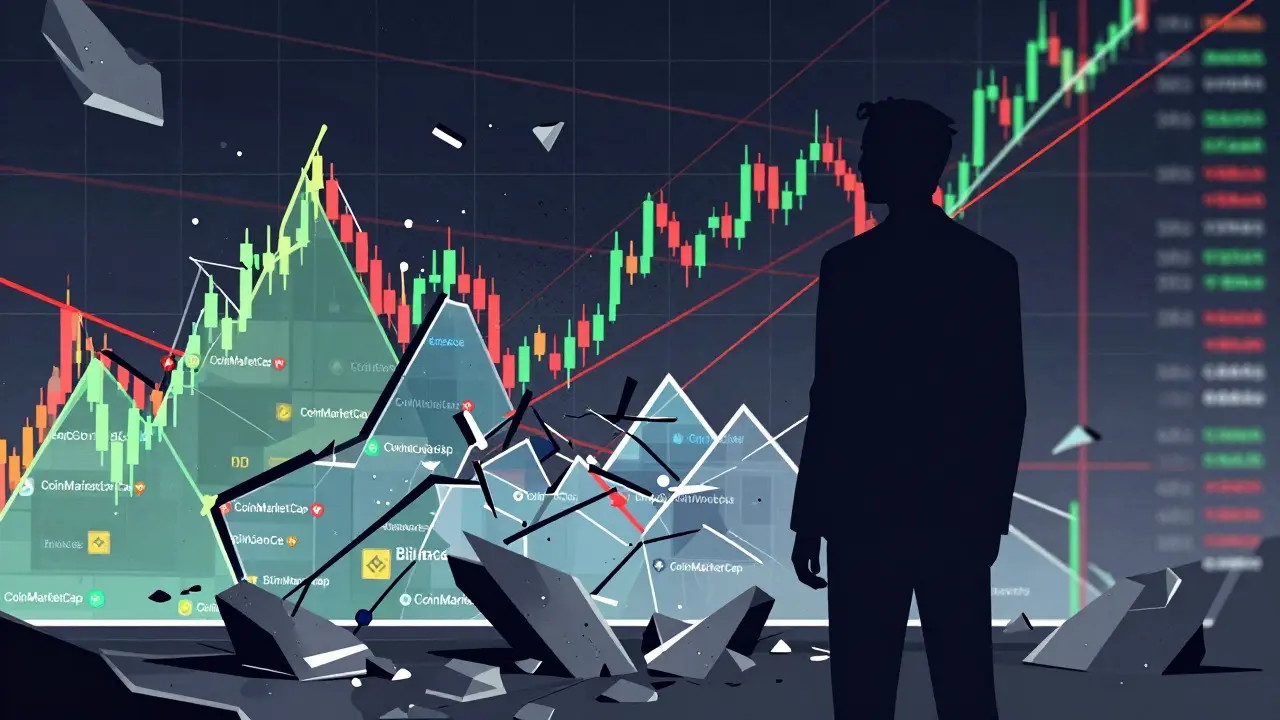
Here is where things get interesting-and concerning. If you check different platforms for GAMA’s price and supply, you will see wildly different numbers. This fragmentation is a major red flag for any serious investor.
| Platform | Price | Total Supply | Market Cap | 24h Volume |
|---|---|---|---|---|
| CoinMarketCap | $0.4212 | 99.99M | ~$42M | $109K |
| CoinGecko | $0.7641 | 100.02M | ~$76M | $322K |
| Binance | $0.6502 | 100.00M | $0 (Listed anomaly) | $315K |
| CoinStats | $1.69 | 142.18M | $181.49M | $17.9K |
Look at those prices. One source says $0.42, another says $1.69. That is not a normal spread. Usually, arbitrage bots smooth out these differences instantly. When you see this kind of divergence, it points to two possibilities: severe liquidity fragmentation or data reporting errors. CoinStats shows a massive market cap of $181 million but only $17,000 in daily volume. A healthy token typically has a volume-to-market-cap ratio of 5-20%. GAMA’s ratio here is roughly 0.01%. This suggests that the price on some exchanges might be propped up by very few trades, making it easy for large holders to manipulate the chart.
Market Position and Competition
GAMA is currently ranked between #3904 and #3934 among all cryptocurrencies. To put that in perspective, there are tens of thousands of coins out there. Being in the bottom quartile means GAMA is a micro-cap asset. It lacks the institutional backing and deep liquidity pools of giants like Gala (GALA) or Immutable (IMX).
Gala and Immutable have market caps in the billions. They offer robust ecosystems, node infrastructure, and partnerships with major game developers. GAMA, by contrast, is fighting for attention in a sector that is consolidating. According to industry reports from late 2025, the top platforms capture over 85% of the Web3 gaming market share. For a niche token like GAMA to survive, it needs a unique hook. Its deflationary burn mechanism is that hook, but without widespread adoption, the mechanism doesn't matter much.
Risks You Need to Know Before Buying
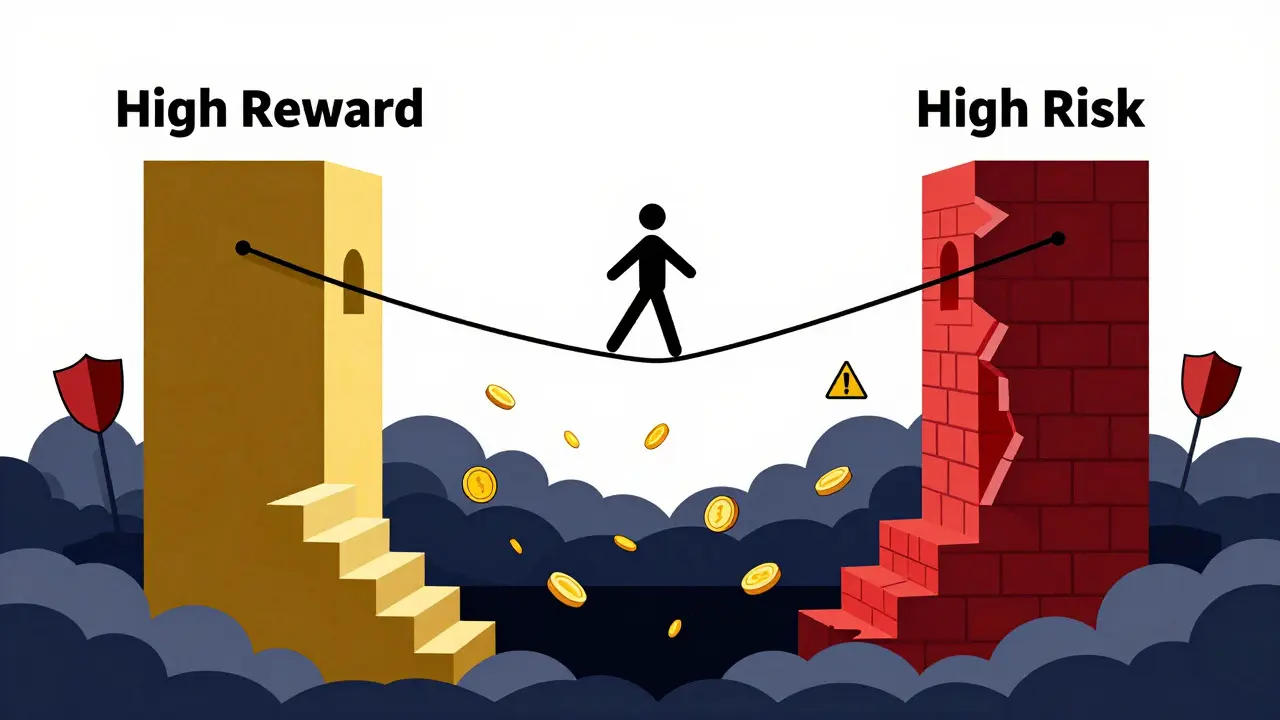
If you are considering adding GAMA to your wallet, you need to be aware of the specific risks involved. This is not a set-it-and-forget-it investment.
- Liquidity Traps: With such low trading volume relative to its size, selling a large amount of GAMA could crash the price significantly. You might find yourself unable to exit a position quickly without taking a heavy loss.
- Data Reliability: The discrepancies in supply and price data suggest that tracking your holdings accurately can be difficult. Always verify the contract address and use multiple sources to gauge true market sentiment.
- Community Engagement: Unlike established projects with vibrant Reddit communities and active Twitter spaces, GAMA shows minimal user discussion. Low engagement often correlates with lower long-term viability because there is no grassroots support to drive adoption.
- Volatile History: GAMA hit an all-time high of around $2.09 in January 2025 before dropping nearly 80%. This level of volatility is typical for micro-caps but can wipe out inexperienced traders who buy the top.
Future Outlook: What to Watch For
So, where does GAMA go from here? Predictions are mixed and largely conservative. Some analysts project a modest growth trajectory, expecting the price to stabilize around $0.60 in 2026 based on a 5% annual growth rate. Others point to technical indicators like the RSI (Relative Strength Index), which has shown oversold conditions, suggesting potential short-term bounces.
However, a bounce is not a trend. For GAMA to sustain upward momentum, it needs tangible developments. Look for announcements regarding new game integrations, partnerships with larger Web3 studios, or improvements in exchange listings. Currently, it is primarily listed on smaller exchanges like WEEX and Bitget. Getting listed on a Tier-1 exchange like Coinbase or Kraken would provide the liquidity boost it desperately needs, but there are no confirmed signs of this happening soon.
Until then, GAMA remains a high-risk, high-reward speculation rather than a stable store of value. It appeals to traders who enjoy hunting for undervalued gems in the gaming sector, but it requires careful risk management. Don’t invest money you can’t afford to lose, and always do your own due diligence on the contract addresses and current liquidity conditions.
Is GAMA Coin a good investment?
GAMA Coin is considered a high-risk investment due to its low market cap, fragmented liquidity, and lack of major exchange listings. While its deflationary model offers theoretical upside, the extreme price discrepancies across platforms suggest potential manipulation or data errors. It may suit speculative traders comfortable with micro-cap volatility but is risky for conservative investors.
Which blockchain is GAMA built on?
GAMA Coin is built on the Solana blockchain. This allows for fast transaction speeds and low fees, which are essential for a gaming platform requiring real-time interactions. Users should ensure they are using a Solana-compatible wallet like Phantom or Solflare to hold GAMA.
Why are GAMA prices different on different websites?
The price differences stem from low liquidity and fragmented trading pairs across various exchanges. With thin order books, small trades can cause significant price swings on one exchange without affecting others. Additionally, some platforms may have outdated data feeds or include illiquid markets in their average calculations.
What happened to the old GAMA contract?
In January 2025, GAMA migrated to a new contract address. This is a common procedure in crypto to upgrade smart contracts or fix bugs. Holders of the old tokens likely needed to swap them for the new version. Always verify the current official contract address from trusted sources before buying or transferring.
How does the deflationary burn mechanism work?
GAMA uses a burn mechanism where tokens are destroyed when players lose games on the platform. This reduces the total circulating supply over time, aiming to create scarcity and potentially increase the value of remaining tokens. Winning players receive GAMA as rewards, balancing the economy through gameplay activity.