What is GemHUB (GHUB) Crypto Coin? A Deep Dive into the Web3 Ecosystem
 Oct, 26 2026
You might have seen GemHUB (GHUB) popping up in your wallet or on a niche exchange and wondered: what is this actually? Is it another fleeting meme coin, or does it have real utility behind the ticker? As of late October 2026, GemHUB isn't just a token; it's the fuel for a sprawling Web3 ecosystem that tries to blend gaming, community rewards, and AI-generated content. But here’s the kicker-it’s not running on its own shiny new Layer-1 blockchain. It lives on Kaia (formerly Klaytn), and its value depends entirely on whether people actually use the services attached to it.
If you’re looking for a simple "buy now" signal, you won’t find one here. This article breaks down exactly how GemHUB works, where it fits in the crowded crypto landscape, and the specific risks you need to know before moving a single dollar. We’ll look at the tech, the tokenomics, and the harsh reality of its current market status.
The Core Concept: More Than Just a Game Token
Originally, GemHUB pitched itself as a blockchain-gaming platform. The idea was straightforward: players earn yield by playing games, and developers get a way to monetize without being crushed by big publishers. Think of it as a decentralized arcade where the house doesn't take all the winnings. However, the project has evolved. By 2026, the official whitepaper repositioned GemHUB as a broader Web3 ecosystem built on POPLUS technology. This shift moves away from pure "play-to-earn" hype toward a model that mixes standard web content with crypto incentives.
The goal is to lower the barrier to entry. Most people don't want to understand gas fees or private keys just to join a community forum or watch a video. GemHUB aims to wrap these Web2-style interactions-like reading articles, participating in events, or creating AI-generated art-in Web3 participation layers. When you engage, you aren't just clicking buttons; you're generating on-chain activity records that can qualify you for Membership NFTs or seasonal rewards. It’s an attempt to make crypto invisible to the user while still rewarding them for their attention.
How the Technology Works (And Where It Lives)
A common misconception is that every crypto project builds its own blockchain. GemHUB doesn’t. It is a utility token deployed on the Kaia network, which is the merged result of Klaytn and Finschia. You can verify this by checking the contract address on any block explorer: 0x4836cc1f355bb2a61c210eaa0cd3f729160cd95e. If you try to send GHUB to an Ethereum mainnet address, you’ll lose your funds. It requires a Kaia-compatible wallet.
The architecture relies on three pillars:
- The Foundation: Manages supply, issuance, and governance design.
- Partner Companies: Handle the actual software development and operational support for games and apps.
- Ecosystem Participants: Users who create content, play games, or consume media, driving the demand for GHUB.
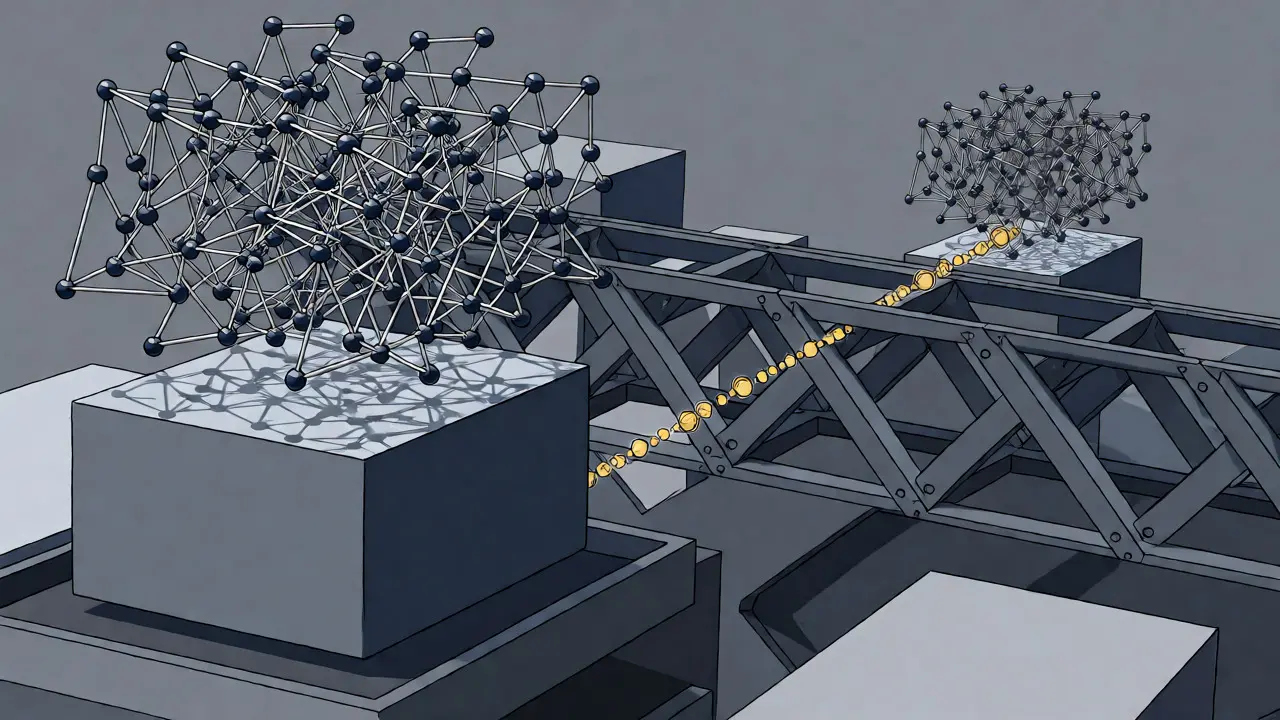
Looking ahead, the team plans to expand beyond Kaia to the Base chain using LayerZero interoperability protocols. This multi-chain strategy is crucial because Kaia, while efficient, doesn't have the same liquidity depth as Ethereum or Base. By bridging assets, GemHUB hopes to tap into a larger pool of users and capital. However, remember that bridges are historically the weakest link in DeFi security, so this expansion comes with inherent technical risk.
Tokenomics: Supply, Demand, and the Vesting Schedule
Let’s talk numbers, because they matter more than the roadmap. The maximum supply of GHUB is capped at 1.2 billion tokens. As of October 2026, circulating supply sits around 813 million, according to major aggregators like CoinMarketCap. That means roughly 67% of the total supply is already in circulation, but don’t let that fool you into thinking the rest is locked forever. Vesting schedules for team and ecosystem allocations often unlock gradually over years, creating potential sell pressure.
| Metric | Value | Note |
|---|---|---|
| Max Supply | 1,200,000,000 GHUB | Fixed cap |
| Circulating Supply | ~813,183,519 GHUB | Varies slightly by data provider |
| Market Cap | ~$2.15 Million | Small-cap asset |
| Fully Diluted Valuation | ~$3.17 Million | Indicates low overall valuation |
| Blockchain | Kaia (Klaytn) | Not a standalone L1 |
The price per token hovers around $0.0026. With a market cap of just over $2 million, GHUB is a micro-cap coin. This volatility cuts both ways: small inflows can spike the price, but large sells can crash it instantly. The demand mechanism is tied to game launches. In the original model, when a new partner game launched, the developer had to buy GHUB to mint the game’s internal token. This created a direct link between game adoption and GHUB demand. If the games fail to attract players, that demand evaporates.
Utility: What Can You Actually Do With GHUB?
So, why would anyone hold GHUB besides speculation? The utility is split across several activities within the Poplus ecosystem:
- Engagement Rewards: Active users earn GHUB for posting, commenting, or sharing content. It turns social interaction into a micro-economy.
- Membership NFTs: Holding or staking GHUB may grant access to exclusive tiers or seasonal programs. These NFTs act as keys to premium features.
- In-Game Currency: While each game has its own token, GHUB is often required to acquire those tokens or participate in initial offerings.
- Advertising and Payments: Creators can accept GHUB for tips or paid content, and advertisers can pay in GHUB to promote posts.
This diversified utility is meant to stabilize the token. If gaming slows down, maybe community engagement picks up. If content creation stalls, maybe advertising revenue fills the gap. It’s a hedge against single-point-of-failure risks common in purely gaming-focused tokens.
Risks and Red Flags You Must Know
No investment is safe, but GHUB carries specific red flags that deserve your attention. First, there is no widely recognized independent security audit from top-tier firms like CertiK or Trail of Bits listed in public documentation. Automated scanners show some alerts, but that’s not the same as a human expert reviewing the code for vulnerabilities. Without a formal audit, smart contract risk remains high.
Second, the team structure is opaque. Public records do not clearly list named founders or directors. In crypto, anonymity can be fine for established protocols, but for a small-cap project trying to build trust, a lack of transparency raises questions about accountability. Who is responsible if the roadmap slips?
Third, liquidity is thin. Trading volumes on exchanges like LBank or via KLAYswap pools are modest. If you buy $10,000 worth of GHUB, you might struggle to sell it quickly without impacting the price significantly. Always check the order book depth before entering a position.
Finally, regulatory uncertainty looms. As a utility token tied to gaming and financial services, GHUB could face scrutiny depending on how jurisdictions classify "play-to-earn" mechanics. If regulators decide these earnings resemble securities, compliance costs could rise sharply.

Community and Market Sentiment
Digging through Reddit, Twitter, and specialized forums, you won’t find a massive, roaring community like you would for Dogecoin or Solana. Sentiment is quiet. There are few detailed user reviews or case studies proving that someone made significant money playing GemHUB games. Most discussions revolve around price charts and exchange listings rather than product experience.
This lack of organic buzz is concerning. A healthy Web3 project usually has grassroots excitement-people sharing screenshots of their earnings, debating game strategies, or creating fan art. For GemHUB, the narrative seems driven more by official announcements than by user enthusiasm. Until we see verifiable proof of active daily users engaging with the POPLUS platform, the community metric remains weak.
Is GemHUB Worth Your Attention?
If you are a speculator hunting for 10x returns, GHUB offers the high-risk/high-reward profile typical of micro-caps. Its pivot to a broader Web3 ecosystem including AI content gives it a modern hook. The integration with Kaia provides decent technical infrastructure, and the plan to bridge to Base shows ambition.
However, if you are a conservative investor looking for proven utility, GHUB is speculative. The lack of clear audits, anonymous leadership, and unproven mass adoption makes it a gamble. It’s best viewed as a venture bet: you’re betting that the GemHUB Foundation can successfully execute its multi-chain roadmap and that partner games will actually attract players. Keep your position size small, verify the contract address carefully, and never invest more than you can afford to lose in a volatile, small-cap environment.
Is GemHUB a scam?
There is no evidence of fraud or rug-pulls in recent history, but it is a high-risk, small-cap asset. The lack of a prominent public team and independent audits adds to the risk profile, so due diligence is essential.
Which blockchain does GemHUB run on?
GemHUB (GHUB) is currently deployed on the Kaia network (formerly Klaytn). Plans are in place to expand to the Base chain using LayerZero interoperability, but Kaia remains the primary home for the token as of late 2026.
Can I buy GHUB on Coinbase or Binance?
As of October 2026, GHUB is not listed on major tier-1 exchanges like Coinbase or Binance. It is primarily traded on smaller centralized exchanges like LBank and BitMart, as well as decentralized exchanges on the Kaia network such as KLAYswap.
What is the total supply of GHUB?
The maximum supply of GemHUB is capped at 1.2 billion tokens. Approximately 813 million tokens are currently in circulation, though exact figures vary slightly between data providers due to different calculation methods for vested tokens.
Does GemHUB have its own blockchain?
No, GemHUB is a utility token, not a native coin of its own Layer-1 blockchain. It leverages the existing infrastructure of the Kaia network for transaction processing and security.