What is Planq (PLQ) Crypto? A Guide to the Mobile-First EVM Chain
 May, 27 2026
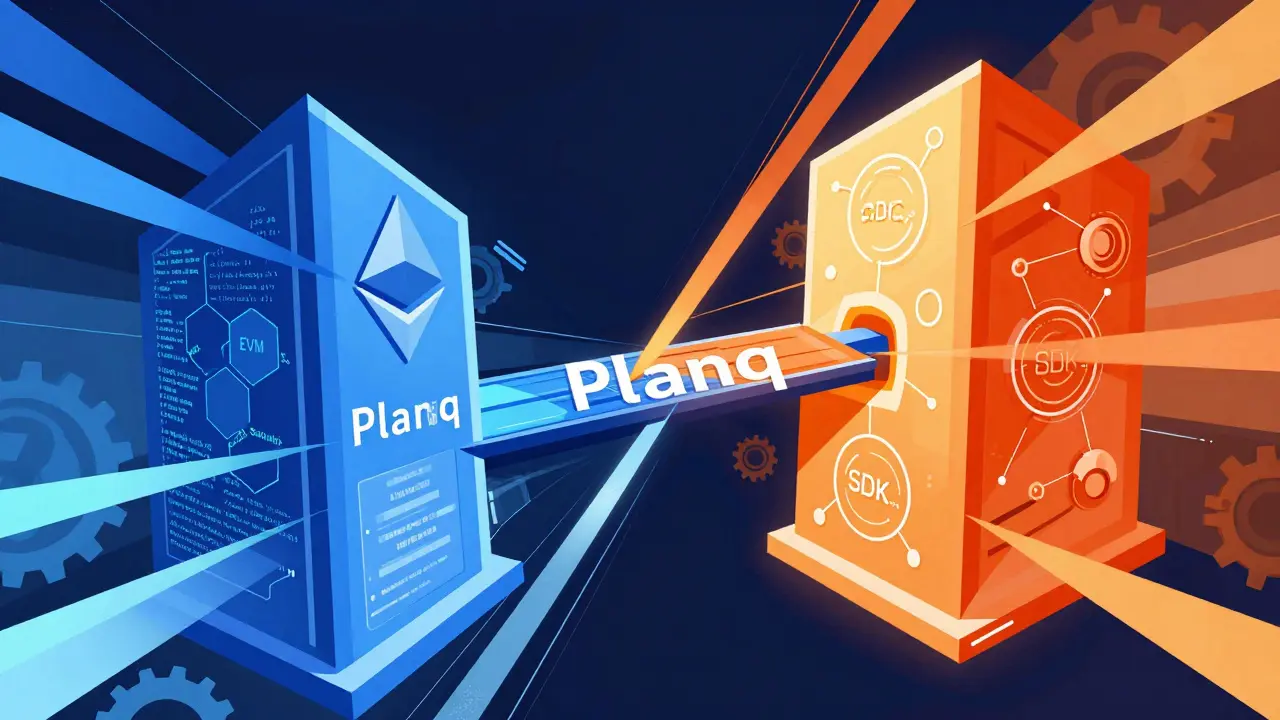
You might have seen Planq, often referred to by its ticker PLQ, pop up on a price tracker or a decentralized exchange. But what actually is it? In short, Planq is a layer-1 blockchain that tries to bridge two massive ecosystems: Ethereum and Cosmos. It uses the Cosmos Software Development Kit (SDK) for its foundation but adds an Ethereum Virtual Machine (EVM) layer on top. This allows developers to write smart contracts in Solidity-the standard language for Ethereum-while benefiting from the fast, low-cost transactions of the Cosmos network. On top of this technical hybrid approach, Planq markets itself aggressively as a "mobile-first" platform, aiming to make crypto usage seamless on smartphones rather than desktop computers.
How Does Planq Work Technically?
To understand Planq, you need to look at its architecture. Most blockchains are built either on the Cosmos model (known for speed and interoperability via the Inter-Blockchain Communication protocol, or IBC) or the Ethereum model (known for vast developer tooling and smart contract complexity). Planq attempts to do both. It runs on Tendermint Core’s Byzantine Fault Tolerance (BFT) consensus engine. This is the same technology that powers the Cosmos Hub, designed to reach finality quickly without the energy waste of Proof-of-Work.
The magic happens with the EVM integration. Because Planq is EVM-compatible, any application built for Ethereum can theoretically be ported to Planq with minimal changes. This lowers the barrier for developers who already know how to code in Solidity. They don’t need to learn a new programming language like Go or Rust, which are common in the Cosmos ecosystem. Instead, they get the best of both worlds: Ethereum’s familiar development environment and Cosmos’s high throughput and cross-chain capabilities.
This setup enables Planq to act as a bridge. Through IBC, Planq can communicate with other chains in the Cosmos ecosystem, such as Osmosis or Cosmos Hub. This means assets and data can move between these networks efficiently. For a user, this translates to potentially lower gas fees and faster transaction times compared to mainnet Ethereum, while still accessing a similar suite of decentralized applications (dApps).
The Role of the PLQ Token
The PLQ token is the fuel that keeps the Planq Network running. It isn’t just a speculative asset; it has specific utility within the ecosystem. First and foremost, PLQ is used for staking. In a Proof-of-Stake system, validators lock up their tokens to secure the network and produce blocks. In return, they earn rewards. By staking your PLQ, you contribute to the security of the chain and can earn passive income, though you also take on the risk of slashing if the validator acts maliciously.
Secondly, PLQ pays for transaction fees. Every time you send a transaction, swap tokens, or interact with a dApp on Planq, you pay a small fee in PLQ. This helps prevent spam and ensures that users share the cost of network maintenance. Finally, PLQ serves as the governance token. Holders can vote on proposals that shape the future of the network, such as parameter changes or funding for ecosystem projects. This makes the network a Decentralized Autonomous Organization (DAO), where decisions are made collectively rather than by a central company.

Mobile-First Philosophy
One of Planq’s most distinct marketing angles is its focus on mobile usability. The official narrative positions Planq as the first cryptocurrency project to prioritize mobile platform usability over desktop dependency. Why does this matter? The majority of internet users access the web via smartphones. Yet, many crypto interactions remain clunky on mobile devices, requiring complex wallet setups or desktop browsers.
Planq aims to change this by optimizing its interfaces and developer tools for mobile screens. This could mean smoother experiences when swapping tokens on a decentralized exchange like Osmosis directly from your phone, or easier access to staking dashboards. While the core technology is robust, the user experience (UX) is where Planq hopes to differentiate itself from other EVM-compatible chains that feel more geared toward power users on laptops.
Market Status and Liquidity Concerns
When evaluating any crypto project, you must look at its market reality, not just its technical promises. As of mid-2026, Planq remains a relatively small-cap asset. Data from major aggregators like CoinGecko and Coinbase shows a circulating supply of approximately 140 million PLQ tokens. The market capitalization hovers in the range of a few hundred thousand US dollars. This places it firmly in the micro-cap category.
Liquidity is a significant factor here. Trading volumes are often reported in the tens or hundreds of dollars per day on decentralized exchanges like Osmosis. This low volume means that large trades can cause significant price slippage. If you try to buy or sell a substantial amount of PLQ, you might find there aren’t enough orders on the book to execute at the current price, leading to unfavorable execution rates.
Furthermore, listing availability is limited. While PLQ is tracked by major platforms like Coinbase and KuCoin for informational purposes, it is not always available for direct spot trading on all centralized exchanges. For instance, KuCoin explicitly notes that PLQ is not officially listed for trading on its platform, despite providing price data. Users primarily trade PLQ on decentralized venues or smaller centralized exchanges like LBank. This lack of deep liquidity on major tier-1 exchanges increases the volatility and risk associated with holding the token.
| Attribute | Details |
|---|---|
| Consensus Mechanism | Proof-of-Stake (Tendermint BFT) |
| Smart Contract Platform | EVM Compatible (Solidity) |
| Interoperability | Cosmos IBC Protocol |
| Token Utility | Staking, Gas Fees, Governance |
| Primary Use Case | Cross-chain DeFi, Mobile-First Apps |
| Supply | ~140 Million Circulating |
Risks and Considerations for Investors
If you are considering adding PLQ to your portfolio, you need to weigh the risks carefully. The primary risk is liquidity. With daily volumes sometimes dipping below $100 on DEXs, exiting a position quickly without impacting the price is difficult. Additionally, the token has experienced extreme price anomalies in the past. Aggregators have recorded All-Time Highs (ATH) that seem disconnected from fundamental value, likely due to low-liquidity spikes or data errors. These distortions can mislead new investors about the token’s true market consensus.
Another consideration is competition. The space for EVM-compatible chains within the Cosmos ecosystem is crowded. Projects like Injective, Kava, and others offer similar hybrid benefits. Planq’s differentiator is its mobile focus, but it needs to demonstrate actual adoption to stand out. Currently, public data on active users, total value locked (TVL), or widespread dApp usage is sparse. Without strong ecosystem growth, the token’s utility may remain theoretical rather than practical.
Regulatory clarity is also absent. Like many smaller crypto projects, Planq does not publish detailed regulatory disclosures or jurisdictional restrictions. This leaves holders uncertain about potential future compliance issues. Always conduct your own research (DYOR) and never invest more than you can afford to lose, especially in micro-cap assets with thin liquidity.
How to Buy and Store PLQ
If you decide to proceed, acquiring PLQ involves a few steps. Since it is not widely available on major centralized exchanges, your best bet is often a decentralized exchange (DEX) like Osmosis. To do this, you will need a Cosmos-compatible wallet that supports IBC, such as Keplr or Leap. You would first acquire an asset like USDC or ATOM, transfer it to your wallet, and then swap it for PLQ on the Osmosis interface. Alternatively, some smaller centralized exchanges like LBank list PLQ pairs, allowing you to buy it directly with fiat or other cryptocurrencies if you prefer the ease of a CEX.
Once you have PLQ, storing it securely is crucial. Using a non-custodial wallet gives you full control over your private keys. Ensure you back up your seed phrase offline. Avoid leaving large amounts of PLQ on exchange wallets, especially those with low liquidity, as withdrawal limits or delays can occur during periods of high volatility.
Is Planq (PLQ) a good investment?
Planq is a high-risk, high-reward asset. Its technical architecture combining EVM and Cosmos is innovative, but its market cap is very small and liquidity is low. This means prices can be highly volatile and difficult to trade in large sizes. It should only be considered by investors who understand the risks of micro-cap cryptocurrencies and are willing to accept the possibility of losing their entire investment.
Can I use MetaMask with Planq?
Yes, because Planq is EVM-compatible, you can technically connect MetaMask to the Planq network by adding it as a custom RPC endpoint. However, for full functionality within the Cosmos ecosystem (like using IBC bridges), you may also need a Cosmos-native wallet like Keplr to manage assets effectively across chains.
What is the difference between Planq and Ethereum?
Ethereum is the original smart contract platform with massive adoption but higher fees and slower speeds. Planq is a newer layer-1 chain that mimics Ethereum’s coding environment (EVM) but runs on the faster, cheaper Cosmos infrastructure. Planq aims to offer lower costs and better mobile UX, but it lacks Ethereum’s vast network effect and liquidity.
Where can I trade PLQ tokens?
PLQ is primarily traded on decentralized exchanges like Osmosis via the Cosmos IBC network. It is also listed on some smaller centralized exchanges such as LBank. Major platforms like KuCoin and Coinbase track its price but may not offer direct spot trading pairs, so check current listings before attempting to trade.
Does Planq have a maximum supply?
Public documentation on a hard cap for PLQ is limited. Currently, the circulating supply is around 140 million tokens. As a Proof-of-Stake chain, inflation typically occurs through staking rewards, meaning the supply may increase over time unless deflationary mechanisms (like burning fees) offset it. Check the latest whitepaper for precise tokenomics details.