What is XNET Mobile (XNET) Crypto Coin? DePIN Guide & Analysis
 Aug, 16 2026
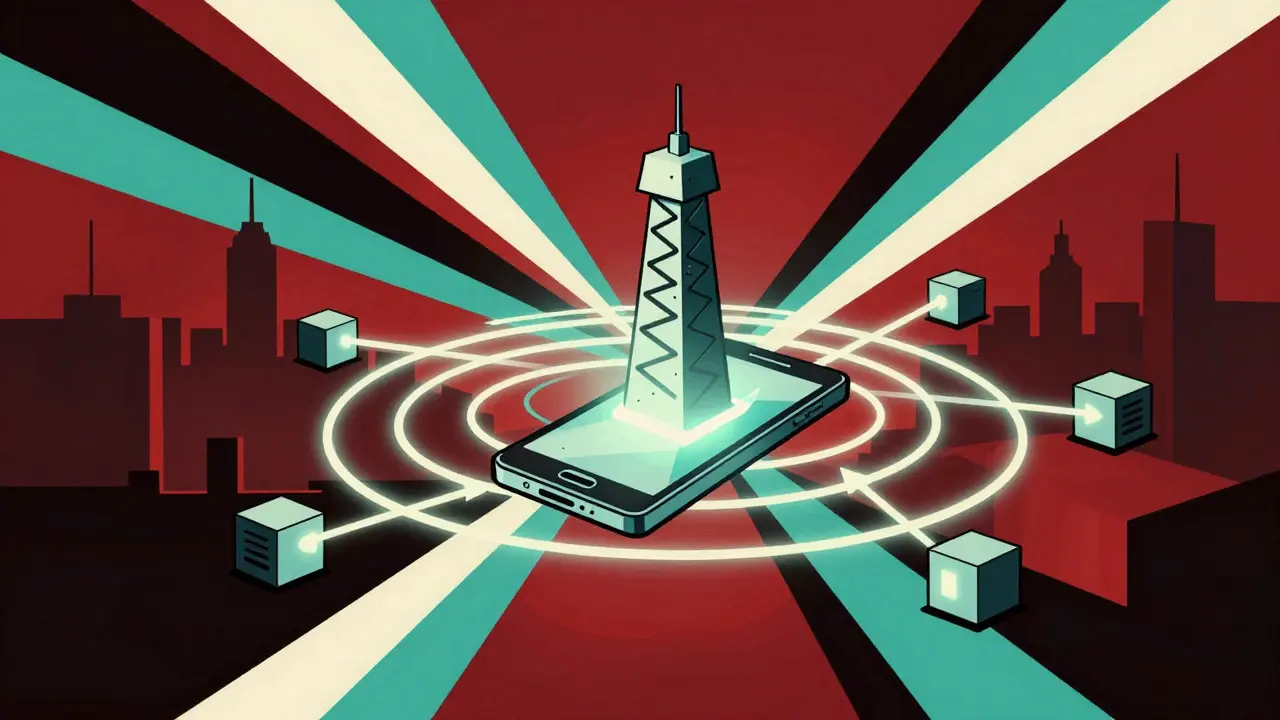
Imagine a world where your phone connects to the internet not just through expensive cell towers, but via thousands of small, community-run hotspots that are cheaper and faster. That is the core idea behind XNET Mobile, a decentralized physical infrastructure network (DePIN) project built on the Solana blockchain. If you have searched for "what is XNET coin," you are likely trying to understand how this specific cryptocurrency works, who is behind it, and whether it offers real value or just hype. Unlike many digital assets that exist purely as speculation, XNET aims to solve a tangible problem: high data costs and poor coverage in crowded areas like stadiums and city centers.
This guide breaks down everything you need to know about the XNET token, from its technical architecture to its economic model. We will look at the numbers, the partnerships, and the risks involved, giving you a clear picture of where this project stands in the current market.
The Core Concept: Decentralized Physical Infrastructure
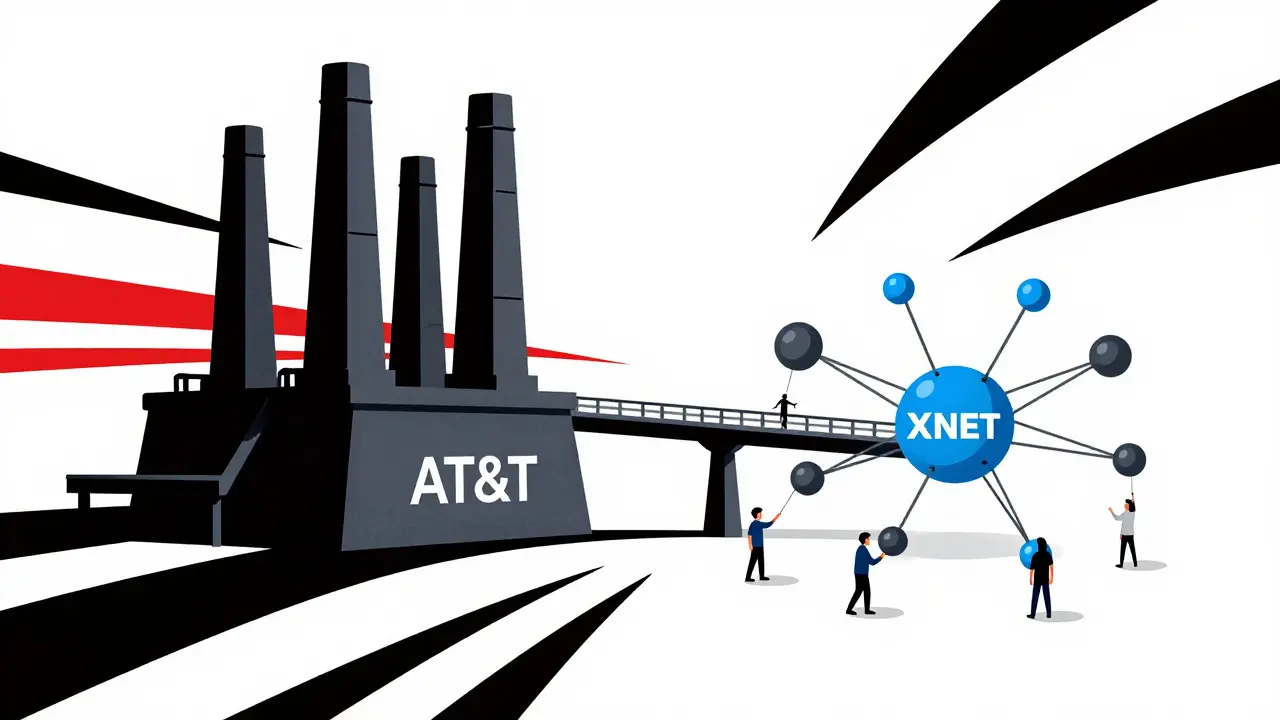
To understand XNET, you first need to grasp what a DePIN is. Traditional telecommunications rely on massive, centralized networks owned by giants like AT&T, Verizon, and T-Mobile. Building these networks is incredibly expensive, which leads to high prices for consumers. XNET Mobile operates as a neutral-host mobile network that leverages Wi-Fi Passpoint and 3GPP cellular technologies to provide fast, reliable, and inexpensive mobile connectivity. Instead of one company owning all the infrastructure, XNET allows anyone to deploy physical hardware nodes. These nodes act as mini-cell towers or high-speed Wi-Fi hotspots. When users connect to them, they get better service, and the node owner gets paid in cryptocurrency.
The technology behind this is called Carrier WiFi Offload. Think of it like traffic diversion. When a main highway (the cellular network) is jammed, cars (data packets) are diverted onto side streets (Wi-Fi hotspots). This reduces congestion on the main line and speeds up your connection. XNET uses Citizens Broadband Radio Service (CBRS) spectrum, which is a shared band of radio frequencies managed by the FCC in the United States. This allows XNET to operate legally alongside major carriers without needing to buy exclusive rights to entire frequency bands, keeping costs lower for the project and its users.
How the XNET Token Works
The XNET token serves as the economic engine of this network. It is a utility token that facilitates payments between different parties in the ecosystem. There are three main groups interacting with the token: node operators, mobile network operators (MNOs), and investors.
- Node Operators: These are individuals or businesses who buy and install XNET hardware. They earn XNET tokens based on how much data their device processes. The more people connect to their hotspot, the more they earn.
- Mobile Network Operators (MNOs): Major carriers pay XNET to access this neutral host network. They do this because it helps them manage congestion in busy areas. When a carrier pays, the revenue is converted into XNET tokens and distributed to the node owners.
- Investors: People who hold the token benefit from a deflationary mechanism. As the network grows and more data is offloaded, more revenue is generated. A portion of this revenue is used to buy back XNET tokens from the open market and burn them, reducing the total supply and potentially increasing the price per token.
This creates a flywheel effect: better network coverage attracts more users, which generates more revenue, which burns more tokens, making the remaining tokens more valuable. It is a direct link between real-world usage and token value, which is a significant step away from pure speculation.
Hardware Economics and ROI
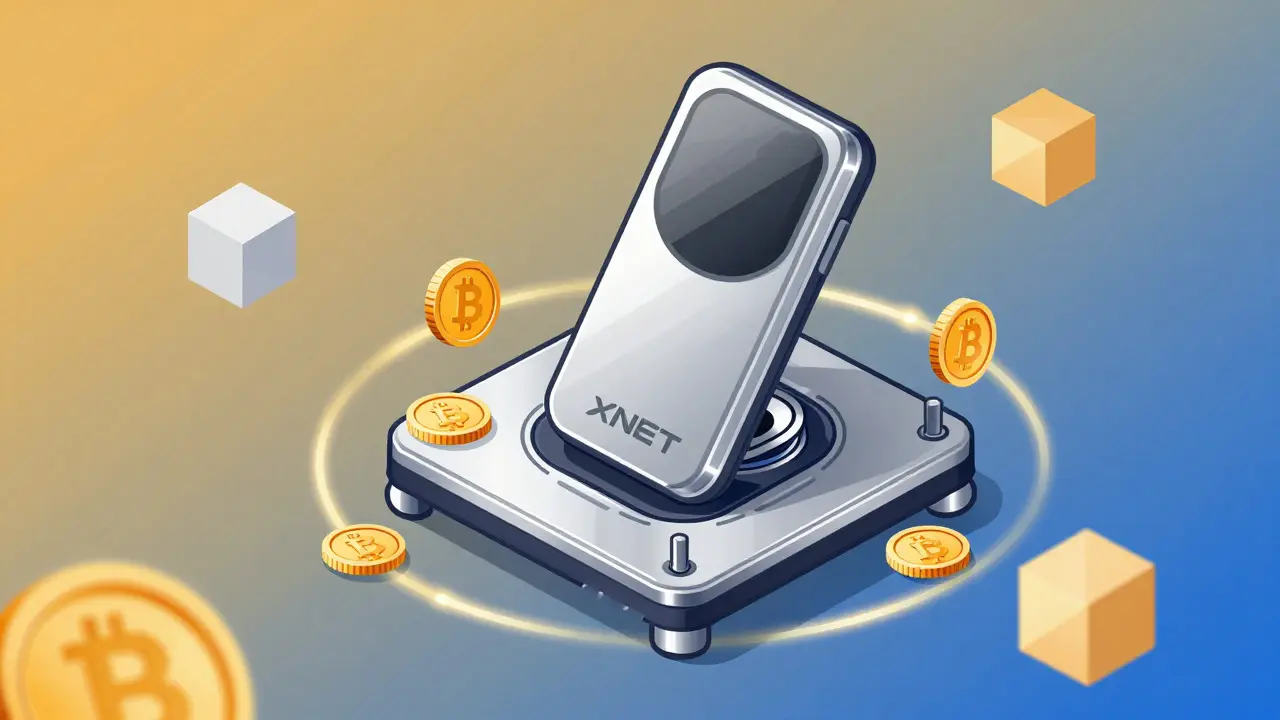
One of the most practical aspects of XNET is its hardware cost and return on investment (ROI). To participate as a node operator, you need to purchase an XNET Mobile device. Currently, the average cost for this hardware is approximately $249.48. This is a relatively low barrier to entry compared to other infrastructure projects that might require thousands of dollars in upfront capital.
According to data from DePIN Scan, each active device generates an estimated daily earning of $2.97. If we run the math, the break-even point is roughly 84 days. This means that if you place a device in a location with consistent foot traffic, you could recoup your initial investment in less than three months. After that, every dollar earned is profit. Of course, this assumes stable performance and no maintenance issues, but it provides a concrete benchmark for potential earnings.
| Metric | Value | Notes |
|---|---|---|
| Hardware Cost | $249.48 | Average price for XNET Mobile device |
| Daily Earnings | $2.97 | Estimated average per active device |
| Break-Even Period | ~84 Days | Time to recover initial investment |
| Revenue Split | 80% / 20% | Shard owners vs. Device owners |
It is worth noting the revenue split structure. XNET uses a "shard" system that allows global participation. Even if you live outside the US, you can buy shares (shards) of devices deployed in high-traffic US locations. Shard owners receive 80% of the rewards, while the physical device owner receives 20%. This design encourages widespread investment in the network's growth, even from those who cannot physically install the hardware themselves.
Market Position and Competitors
XNET does not exist in a vacuum. It competes primarily with other DePIN projects, most notably Helium. While Helium has a larger market cap and brand recognition, XNET differentiates itself through verified carrier partnerships. According to recent reports, XNET has secured a partnership with AT&T, one of the largest carriers in the US. This is a critical distinction. Many DePIN projects struggle to prove that their networks are actually used by real customers paying real money. XNET’s model relies on carriers paying for data offload services, providing a layer of legitimacy that speculative tokens often lack.
However, XNET is still a small-cap project. As of mid-2026, its market capitalization hovers around $589,530 USD, with a circulating supply of approximately 64.12 million tokens. This is tiny compared to industry leaders. For context, Helium’s market cap peaked over $1 billion. This small size means high volatility. A single large sale can significantly impact the price. Additionally, liquidity is a concern. The 24-hour trading volume is often below $20,000, which can make entering or exiting positions difficult without moving the price against you.
Risks and Challenges
No investment is without risk, and XNET faces several specific challenges. First, there is the issue of exchange support. Some platforms, including TradingView, have marked XNETUSD as "Delisted" or show inconsistent data, suggesting that accessibility for retail investors may be limited. Before buying, you should verify which exchanges currently list the token and ensure they are reputable.
Second, there are discrepancies in reported data. CoinMarketCap lists a circulating supply of 64.12 million, while CoinGecko reports 140 million. This kind of mismatch can confuse investors and raise questions about tokenomics transparency. Always check multiple sources before making a decision.
Finally, the project is heavily dependent on scaling its physical infrastructure. Currently, only 111 active devices are verified on-chain. While this number is growing, it is still very small relative to the global telecom market. If the team fails to expand the network rapidly, the revenue stream may not grow fast enough to justify long-term price appreciation. Regulatory hurdles regarding CBRS spectrum usage in different regions could also pose obstacles to international expansion.
Frequently Asked Questions
Is XNET a good investment?
Whether XNET is a good investment depends on your risk tolerance. It has strong fundamentals with real-world utility and carrier partnerships, but it is a small-cap asset with low liquidity and high volatility. It suits investors who believe in the DePIN thesis and can handle short-term price swings.
How do I start earning with XNET?
You can start by purchasing an XNET Mobile device for around $250 and installing it in a high-foot-traffic area with reliable power and internet. Alternatively, you can buy "shards" of existing devices to earn passive income without handling the hardware yourself.
What blockchain does XNET use?
XNET is built on the Solana blockchain. This choice allows for fast transaction speeds and low fees, which is essential for a network that needs to process frequent micro-transactions from data offloading events.
Who is the partner carrier for XNET?
AT&T is a verified partner of XNET Mobile. This partnership allows AT&T users to connect to XNET hotspots, generating revenue for the network and rewarding node operators with XNET tokens.
What is the difference between XNET and Helium?
While both are DePIN projects focused on wireless connectivity, XNET emphasizes a neutral-host model with direct carrier revenue sharing and CBRS spectrum usage. Helium focuses more on a broader LoRaWAN and 5G ecosystem. XNET currently has a smaller market cap but highlights its AT&T partnership as a key differentiator for immediate revenue generation.
Calliope Clio
August 18, 2026 AT 05:11Oh, how delightful. 🙄 Another DePIN project pretending to solve the world's problems with a $250 plastic box and some Solana gas fees. The 'flywheel effect' is just a fancy term for a Ponzi scheme where the exit liquidity is you.
OLIVER CHRISTIAN
August 18, 2026 AT 18:49Don't let the cynics scare you off too early. I've been tracking DePINs since Helium launched, and the key differentiator here really is the AT&T partnership. Most of these projects are vaporware until they get a real carrier on board. If you want to dig deeper, check out the whitepaper section on CBRS spectrum usage; it's actually quite robust compared to the LoRaWAN crowd. Just keep an eye on the liquidity though, small caps can be bumpy rides.
Mike Baca
August 20, 2026 AT 18:48honestly i think the hardware cost is the biggest hurdle not the tech. $250 is cheap but who wants to install another antenna in their attic? also the break even math seems a bit optimistic if you factor in electricity and maintenance. but i guess if you live in a dense city like nyc or chicago it might make sense? just my two cents tho
Abigail Sparks
August 21, 2026 AT 14:12You're overthinking it! The beauty is in the simplicity. Buy the device, plug it in, earn tokens. It's that easy. Plus, the shard system means you don't even have to own the hardware if you're lazy like me. Just buy shards and watch the money come in. It's passive income done right!
Rod Sidoroff
August 22, 2026 AT 20:59Passive income is a myth sold by people who don't understand market dynamics. The revenue split of 80/20 favors the shard owners, which creates a class of speculators rather than actual infrastructure builders. This isn't about building a network; it's about creating a yield product for degens. The fundamental flaw is assuming that data offload demand will scale linearly with node count. It won't. Carriers will optimize their own core networks first. XNET is a niche solution being marketed as a revolution. Enjoy the ride while it lasts.
Kate Staab
August 23, 2026 AT 22:16Dramatic much? The fact that we are debating whether a $250 hotspot is a 'revolution' or a 'niche solution' shows just how desperate this space is for relevance. We are still talking about bandwidth in 2026 as if we haven't solved basic connectivity issues. It’s all so... quaint. And frankly, a bit embarrassing for the 'tech-savvy' crowd. Who needs Wi-Fi Passpoint when you could just use satellite internet? The future is overhead, not in your pocket. 😒
Dianne Ritter
August 25, 2026 AT 02:28I find the whole thing interesting but a bit confusing. Is it really cheaper than just getting a better phone plan? My current carrier offers unlimited data for $80. If I have to pay $250 for hardware plus potential costs, does it actually save me money in the long run? Or is this mostly for people who already love crypto?
Tasha Davis
August 25, 2026 AT 08:15It's not just about saving money on your bill! It's about owning your connection! Think of it like buying solar panels. You pay upfront, but then you're independent from the grid (or in this case, the big carriers). Plus, if the token goes up, you win twice! It's super exciting! Don't overthink the math, just trust the vision!
Kelsey Anne
August 26, 2026 AT 04:08Solar panel analogy is flawed. Solar reduces marginal cost of energy. XNET increases fixed cost for connectivity. Unless the token appreciates exponentially, the ROI is negative. Be careful with your metaphors.
Leah Humphrey
August 26, 2026 AT 21:21From a tokenomics perspective, the deflationary mechanism is the only real value prop here. The burn rate depends entirely on MNO payment volumes. If AT&T decides to route less traffic through the neutral host network, the buyback pressure vanishes. We need to monitor the on-chain data for actual data packet counts, not just node uptime. Uptime doesn't equal revenue. Revenue equals burns. Burns equal price support. Simple supply-demand mechanics applied to a physical layer protocol. It's elegant, provided the execution holds up under scrutiny.
Niall O'Rourke
August 27, 2026 AT 14:11you guys are missing the point again. its not about the tech. its about the community. well sort of. actually no. its about the speculation. everyone knows the tech is secondary. the real game is who can sell the most air to the next guy. and honestly the UK market is going to ignore this because we have decent mobile coverage anyway. so yeah. good luck to the US folks. i'll stick to my fiber optic line. it's faster and doesn't require me to hold a volatile asset. typical american dream stuff. nice and chaotic.
Jillian Groskreutz
August 28, 2026 AT 12:35Chaos is order waiting to be exploited! That's what I say! The volatility IS the opportunity! If you're scared of the swings, you shouldn't be in crypto at all! But for those of us brave enough, XNET is a diamond in the rough! Well, maybe a coal diamond, but still shiny! Keep holding tight, friends! The moon is calling!
Carmene Jackson
August 30, 2026 AT 03:19Ugh, someone please calm down. I just wanted to know if I could use this for my business wifi. Do I need to be a crypto expert to set it up? My IT guy said he hates blockchain stuff. So is this user-friendly or am I signing up for a headache? Also, does it work with Apple devices properly? Asking for a friend (me).
Teri W
August 31, 2026 AT 01:46Oh, the drama of it all! First, the tech is 'quaint,' now it's 'chaotic.' Can we agree that it's simply... complicated? For the record, yes, it works with Apple devices via standard Wi-Fi Passpoint protocols. No special apps needed for basic connectivity. The crypto part is optional for the end-user; they just connect. The complexity is for the node operators and investors. So if you just want internet, it's fine. If you want to gamble on the token, prepare for the emotional rollercoaster. It's a very modern kind of tragedy, really. Shakespeare would have written a play about decentralized bandwidth. 'The Tempest of the Token.'
Melissa G
September 1, 2026 AT 13:33In the grand scheme of human connectivity, XNET represents a fascinating paradox. We seek autonomy in our digital lives, yet we rely on centralized entities to validate our freedom. The DePIN model attempts to decentralize the physical layer, but it remains tethered to the economic incentives of speculative markets. Is true freedom possible when access to information is priced in a volatile currency? Perhaps. Or perhaps we are merely trading one form of dependency for another. The philosophical implications of owning your infrastructure while renting your stability are profound. We must ask ourselves: do we value the tool, or the transaction? In the end, the network is only as strong as the consensus behind it. And consensus, unlike code, is fragile. Let us proceed with both optimism and caution, for the road ahead is paved with uncertainty and possibility alike.